
Types of Trenching Services We Offer
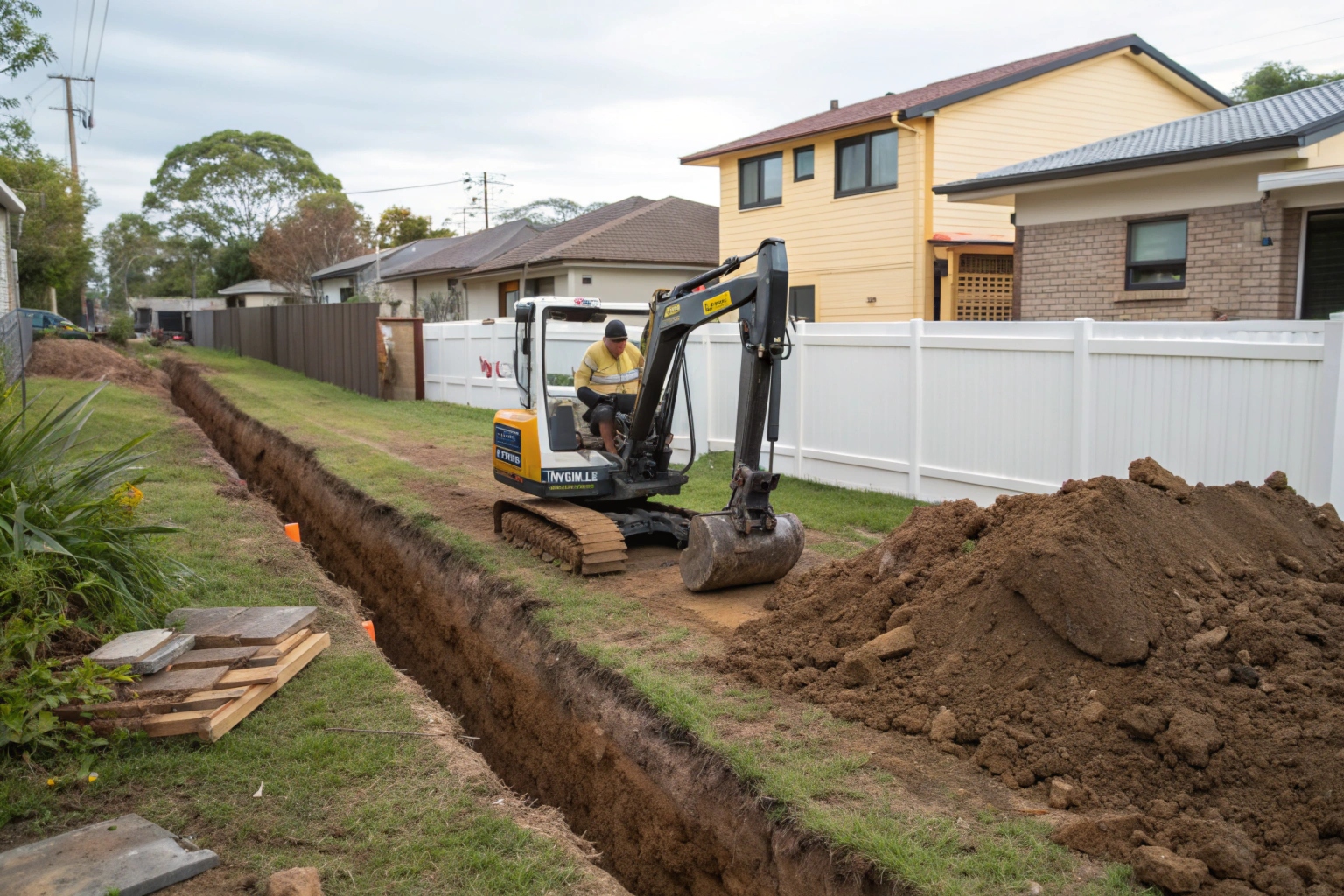
We handle pretty much any type of trenching work you’d need around a Hobart property. Most of what we do falls into a few main categories, and honestly, a lot of jobs end up combining two or three different types of trenching.
Utility Service Trenches – This is your bread and butter stuff when you’re connecting a property to mains services. We dig trenches for water lines, sewer connections, gas pipes, and electrical runs from the street to your house or new building. Most of these sit around 450-900mm deep depending on what’s going through them, and they need to be dead straight and at the right depth or you’ll have problems down the track.
Drainage Trenches – If you’ve got water pooling on your property or need proper stormwater management, drainage trenching sorts it out. We install agricultural pipe, connect to council systems, and make sure everything’s got the right fall so water actually goes where it’s supposed to. With Hobart getting 600mm+ of rain most years, proper drainage trenching isn’t optional – it’s essential.
Footing Trenches – When you’re building retaining walls, fence lines, or need strip footings for extensions, you need trenches dug to exact specifications. Engineers will tell you exactly what they want, and we make sure that’s what you get. Clean edges, proper depth, level base – all the stuff that keeps your structures standing for decades.
Service Connection Trenches – This covers everything else – NBN and telecommunications, irrigation systems for your garden, pool equipment connections, or running power to a shed. These are usually shallower trenches but they still need precision, especially when you’re working around existing services.

Service Location & Safety - Why Dial Before You Dig Isn't Optional
We can’t start digging trenches until we know exactly what’s already underground. And in established Hobart suburbs like Glenorchy or Moonah, there’s a lot more down there than you’d think.
Every single trenching job starts with Dial Before You Dig. It’s not just a good idea – it’s mandatory, and for bloody good reason. We’re talking about water mains that’ll flood your property if hit, electrical cables that can kill someone, gas pipes that create genuine explosion risks, NBN and telecommunications that cost thousands to repair, and stormwater drains that you don’t want to crack open.
Here’s how it actually works – we lodge a request with Dial Before You Dig, and within a few days we get back plans showing where all the registered services run on your property. Then we mark everything out on site before we even fire up the excavator. But here’s the catch – those plans aren’t always 100% accurate, especially on older properties where services were added over the years and records weren’t kept properly.
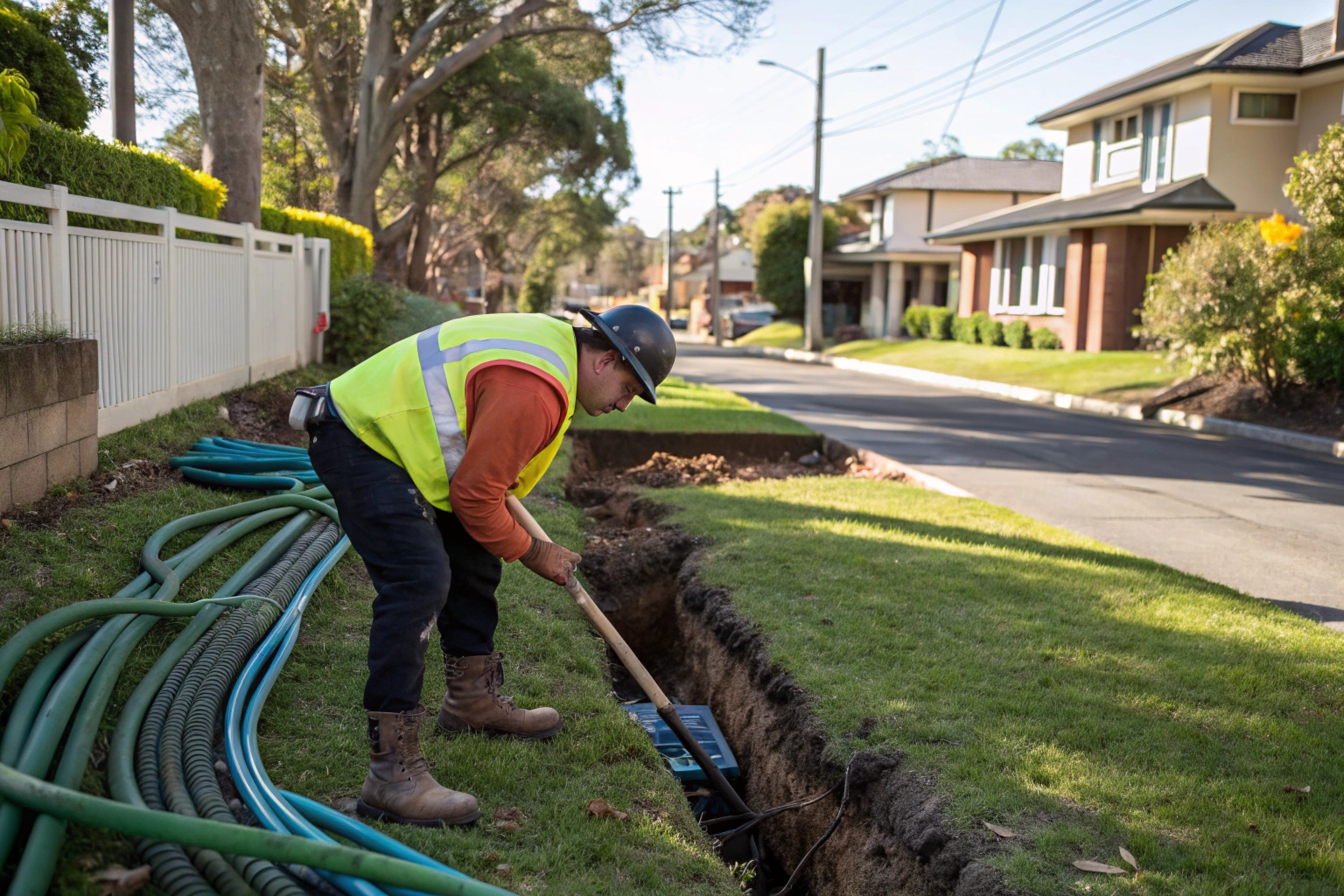
That’s why we hand dig within 500mm of any known service location. Doesn’t matter if we’re using a mini excavator that could do it faster – when we’re that close to existing services, it’s shovels and hand tools only. Takes longer, costs a bit more, but it’s the difference between a smooth job and a disaster that shuts down your street.
We’ve worked on enough Hobart properties to know where things usually run, but we never assume. Every property gets the full safety process, every time.
Working with Hobart's Tricky Site Conditions
Trenching work in Hobart comes with its own set of headaches that you don’t always get on the mainland. We’ve learned this the hard way over the years, and honestly, it’s why you want someone local who’s dealt with these properties before.
Access is probably the biggest issue. Heaps of Hobart homes in suburbs like Lenah Valley or Sandy Bay were built decades ago when nobody thought about mini excavators needing to get down the side. You’ve got narrow side passages, sometimes 800mm wide if you’re lucky, sloping driveways that make positioning equipment a nightmare, and established gardens that owners (rightfully) don’t want us destroying. We bring smaller machines for tight access, and yeah, sometimes we’re hand digging sections because that’s the only way to get it done without wrecking your property.
Rock’s another fun one. Some areas around Hobart have rock sitting closer to the surface than others, and you don’t always know until you start digging. When we hit rock, we’ve got breaker attachments to handle it, but it adds time and cost. We’re upfront about this possibility during quoting – nobody likes surprise bills.
Heritage areas need extra care too. If you’re in Battery Point or parts of Sandy Bay, there’s additional considerations about how we work and what we disturb. And Hobart’s weather? Well, winter trenching isn’t fun, but sometimes it can’t be helped. We just plan around rain where we can and have contingencies for when it hits.
Bottom line – we’ve seen it all, and we know how to work around Hobart’s quirks without leaving your property looking like a disaster zone.
Getting the Trench Specifications Right
This is where a lot of cowboys cut corners, and it’s exactly where you’ll have problems later if the work’s done wrong. Every trench needs to be dug to specific depths and widths based on what’s going through it, and there’s no fudging these numbers.
Standard utility services usually sit at 450-600mm deep. Your electrical and NBN lines need minimum 450mm, water and sewer typically run 600-900mm depending on the run and what your plumber specifies. Footing trenches? That’s entirely down to what the engineer’s drawings say – could be 400mm, could be 800mm – and we stick to those specs exactly.
The width depends on pipe or cable size plus the working room needed to actually install things properly. A 100mm sewer pipe needs a trench wider than 100mm so there’s room to bed it properly and get fittings connected. We don’t dig trenches wider than necessary (why move more dirt than you need to?), but we don’t cut them too narrow either.
Here’s what separates decent trenching from rubbish work – straight edges, accurate depth control, and a clean base. We’re not just gouging a hole in the ground. Every trench gets a level base free from rocks and debris, sides that are cut clean so they don’t collapse, and exact depth checked multiple times along the run. When your plumber or electrician shows up, they should be saying “perfect, exactly what we needed,” not scratching their head trying to work with a wonky trench.
Base Preparation & Backfilling - The Stuff You Don't See That Matters Most
Nobody’s impressed by a trench that’s been dug. What matters is what happens before the pipes go in and after they’re laid – that’s where quality work separates itself from the cheap stuff that causes problems later.
Base preparation is critical. Once we’ve got the trench to depth, we don’t just chuck pipes in and start filling. The base needs to be level, compacted, and prepped with the right bedding material. For most pipe work, that means a layer of sand or pea gravel that the pipe sits on. This does two things – gives the pipe a stable, even base so it doesn’t settle unevenly, and protects it from any rocks or hard edges in the soil. Drainage pipes need a specific fall (usually 1:100 minimum) to work properly, so we’re checking levels constantly to make sure water’s actually going to flow.
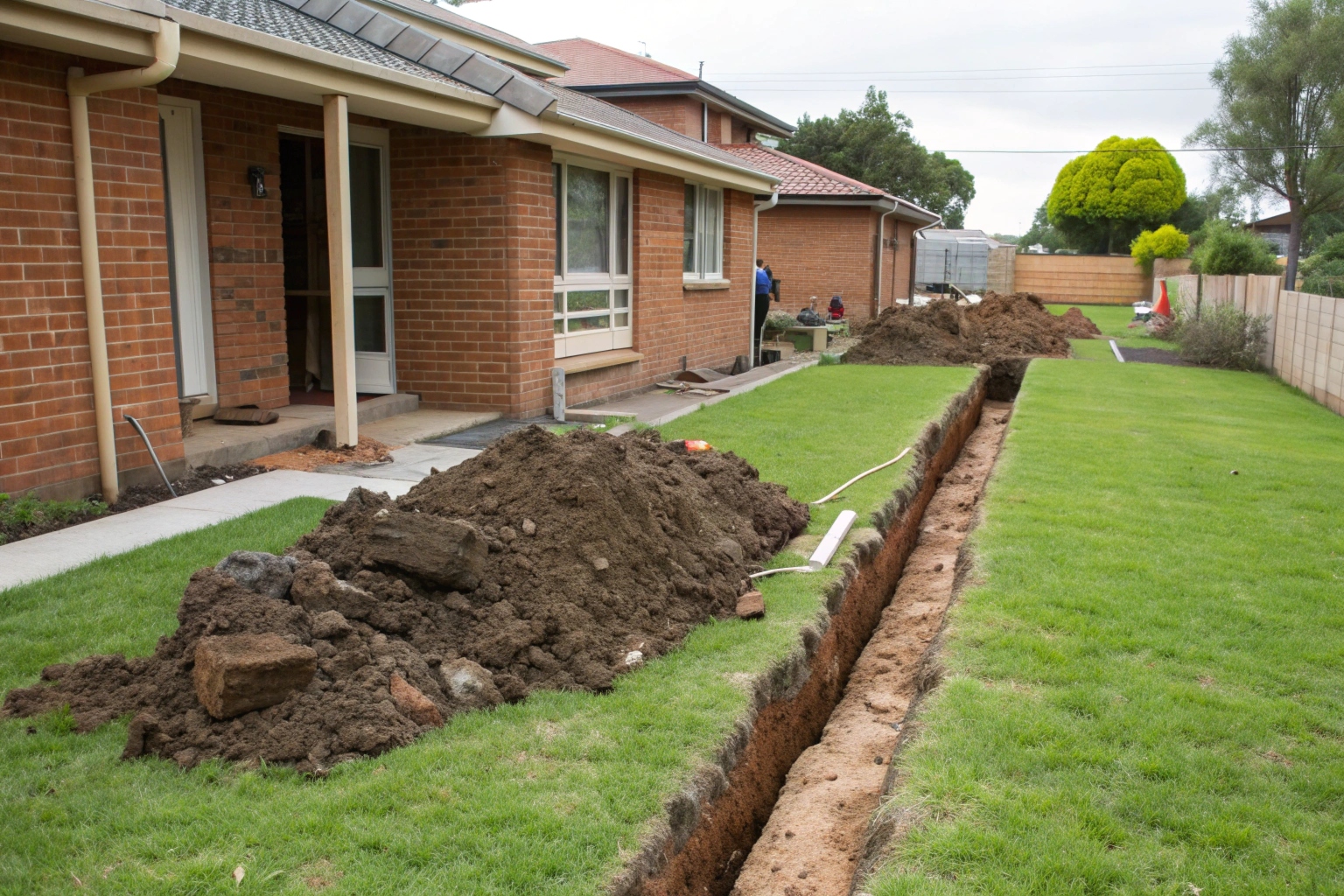
Backfilling’s just as important as the digging. We don’t wait until everything’s installed and then dump all the soil back in one go. It’s done in layers, compacting as we go, protecting the pipes or cables from getting knocked around. For water or sewer lines, there’s often a sand surround requirement – basically wrapping the pipe in sand before the regular fill goes back in. This protects against ground movement and makes future repairs easier.
The compaction’s what stops your trenches settling six months later and leaving dips across your driveway or lawn. We compact in 150-200mm lifts, not massive dumps of soil. Takes longer, but it’s the only way to do it properly. And when we’re done, your property gets restored – lawn replaced, gardens reinstated, paths put back. You shouldn’t be able to tell where we dug in a year’s time.
Frequently Asked Questions About Trenching Services
Depends what you’re trenching for. If it’s just connecting services to an existing building, usually no permit’s needed for the trenching itself (though your plumber or electrician might need permits for their work). If you’re trenching for a new build, extension, or major earthworks, then yeah, you’ll need approvals. We can let you know what’s required for your specific job, and we’re familiar with Greater Hobart council requirements.
We’re not here to wreck your property. We lay down boards or plywood to distribute equipment weight, we hand dig near established plants where possible, and we stack the topsoil separately so it goes back on top when we backfill. After compaction, we replace lawn and reinstate garden beds. Most of our clients are amazed how quickly things grow back.
We’ve got rock breaker attachments for when we hit solid rock. It takes longer and costs more than regular digging, so we flag it as a possibility during quoting. Sometimes if there’s extensive rock we might recommend routing the trench slightly differently if that’s an option. We don’t just battle through regardless – we find the most sensible solution.
We can, but there’s limits. Heavy rain and saturated ground make trenching messy and unstable. We schedule around weather where possible and keep you updated if conditions force delays. Sometimes jobs need to happen in winter regardless, and we make it work – just with realistic expectations about potential weather delays.
We follow every safety protocol – Dial Before You Dig on every job, hand digging within 500mm of known services, and proper service location procedures. Can’t eliminate every risk (sometimes services aren’t where records say they are), but our safety record speaks for itself. We’ve never had a major service strike, and that’s because we don’t cut corners.
Get Your Trenching Work Done Right
Look, trenching isn’t the most exciting part of any project, but it’s one of those things that needs doing properly or you’ll be dealing with headaches for years. Whether you’re connecting a new granny flat to services, finally sorting out drainage that’s been causing problems, or need footings dug for a retaining wall, we’ve done hundreds of these jobs across Hobart.
We handle all the Dial Before You Dig requirements, we coordinate with your other tradies so there’s no stuffing around with timing, and we leave your property in good nick when we’re finished. No cowboys, no shortcuts, just proper trenching work done by locals who’ve been doing this around Hobart for years.
Give us a call and we’ll come out for a look. We can usually give you a pretty accurate idea of costs on the spot, let you know if there’s any potential complications with your site, and talk through timing. No pressure, no obligation – just honest advice about what your job actually needs.
We service the greater Hobart area including Glenorchy, Moonah, Kingston, Lenah Valley, Claremont, Sandy Bay, and everywhere in between. If you’re in the northern or eastern suburbs, we’ve probably worked on a property near you already.
Get in touch today and let’s get your trenching sorted.
