
What Are Strip Footings & How They Work
What Are Strip Footings?
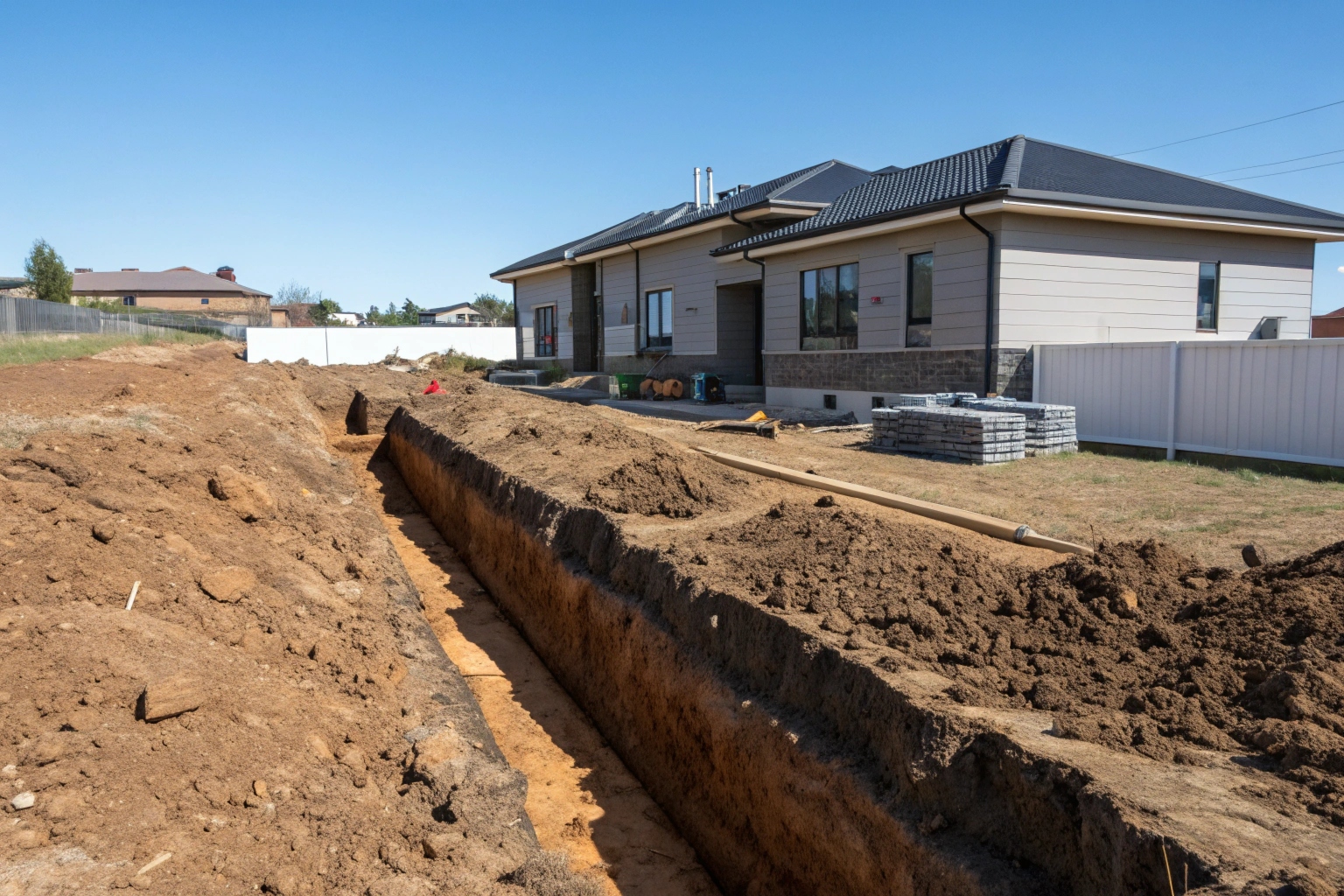
Strip footings are continuous concrete trenches that run along the length of your load-bearing walls. Think of them like a concrete ribbon that sits under every wall that’s holding up your building – both external perimeter walls and internal structural walls.
They’re called “strip” footings because they’re narrow strips of concrete (usually 450-600mm wide) rather than a full slab. The concrete sits below ground level, typically 300-600mm deep depending on your soil type and what the engineer specifies.
How Strip Footings Transfer Building Loads
Here’s what they’re actually doing: your roof weight pushes down onto your walls, your walls push down onto the strip footings, and the footings spread that load across a wider area of soil so the ground can handle it without settling or sinking.
The footing width matters because different soils have different load-bearing capacities. Sandy soil might handle pressure better than reactive clay, so clay areas need wider footings to spread the weight out more. That’s why you can’t just use the same footing specs for every property in Hobart – soil testing determines what you actually need.
Reinforcement is critical too. Steel bars (usually N12 or N16 rebar) run through the concrete – top and bottom – to handle tensile stresses and prevent cracking. The concrete handles compression forces, the steel handles tension. Together, they create a foundation that won’t crack or fail under your building’s weight.
This system’s been proven over decades in residential construction. When engineered and poured properly, strip footings handle multi-story loads, wall weights, and ground movement without breaking a sweat.

Applications & Common Uses in Hobart
New Home Construction
Strip footings are the standard foundation for most new homes in Hobart, especially when you’re building with suspended timber or concrete floors rather than a slab-on-ground. They support your external walls and any internal load-bearing walls, creating a stable base for the entire structure to sit on.
Home Extensions & Renovations
Adding a room? Building out the back? Strip footings are what you’ll need to support those new walls. We pour them all the time for kitchen extensions, additional bedrooms, and sunroom additions across Glenorchy, Moonah, and Lenah Valley. The footings tie into your existing foundation system and handle the new loads without putting stress on the original structure.
Brick Veneer Homes
If you’re building with brick veneer – which is common in Hobart’s established suburbs – your strip footings need to be designed for the extra weight of that masonry. Brick’s heavy, and the footings need proper width and reinforcement to handle it long-term without settling.
Supporting Suspended Floor Systems
Timber floors, concrete floors sitting above ground level, raised foundations for sloping blocks – all of these rely on strip footings to create that stable perimeter support. The footings let you build up off the ground, which is handy for drainage, underfloor access, and dealing with Hobart’s sloping terrain in suburbs like Sandy Bay and Mount Nelson.
Retaining Walls & Load-Bearing Structures
Strip footings also work as foundations for retaining walls, especially when those walls are carrying loads from above. Properly designed footings prevent the wall from tipping, sliding, or settling over time.
Hobart Soil & Site Considerations
Here’s something a lot of people don’t realise until they’re into a project – Hobart’s soil conditions vary massively from suburb to suburb, and that directly affects your strip footing design.
Why Soil Testing Matters
Before we pour anything, we need to know what’s under your property. Clay soils? Sandy soils? Rock just below the surface? Each one changes the footing width, depth, and reinforcement requirements. A soil test tells us the bearing capacity – basically, how much weight that soil can handle per square meter – and the engineer uses that to spec your footings properly.
Reactive Clay Soils
A lot of Hobart properties – especially around Glenorchy, Claremont, and parts of Moonah – have reactive clay soils. Clay expands when it gets wet and shrinks when it dries out, which means your footings need to be wider and deeper to resist that movement. We’re often looking at 600mm wide footings instead of the standard 450mm to handle clay properly.
Sloping Sites & Hillside Properties
Hobart’s full of sloped blocks, particularly in West Hobart, Mount Nelson, Sandy Bay, and Lenah Valley. Strip footings on slopes need to be stepped – dropping down in sections to maintain proper depth while following the ground contour. It’s more complex than flat sites, but it’s standard practice here and something we engineer for regularly.
Frost Depth & Groundwater
Footings need to sit at least 300mm below ground level in Hobart to get below the frost line. Winter frosts can cause ground movement, and shallow footings risk heaving and cracking. Drainage is the other big one – we need to manage groundwater and stormwater so it’s not sitting against your footings and causing long-term moisture issues.
The Construction Process
Engineering & Site Assessment
First step’s always getting an engineer to design your footings based on soil tests and building loads. They’ll specify the exact width, depth, reinforcement, and concrete strength you need. Once we’ve got engineering drawings and council approval, we’re ready to start.
Excavation & Trench Preparation
We dig trenches to the engineer’s specified depth – usually 300-600mm below ground level, depending on your soil type and frost requirements. Trench width matches the footing width, typically 450-600mm. On sloped sites, we step the trenches down to maintain proper depth while following the terrain.
The trench base gets levelled and compacted. If we hit rock during excavation (happens in some Hobart areas), we’ll need to adjust depth or use machinery to get through. Loose or unstable soil gets removed and replaced with compacted fill.
Formwork, Reinforcement & Pouring
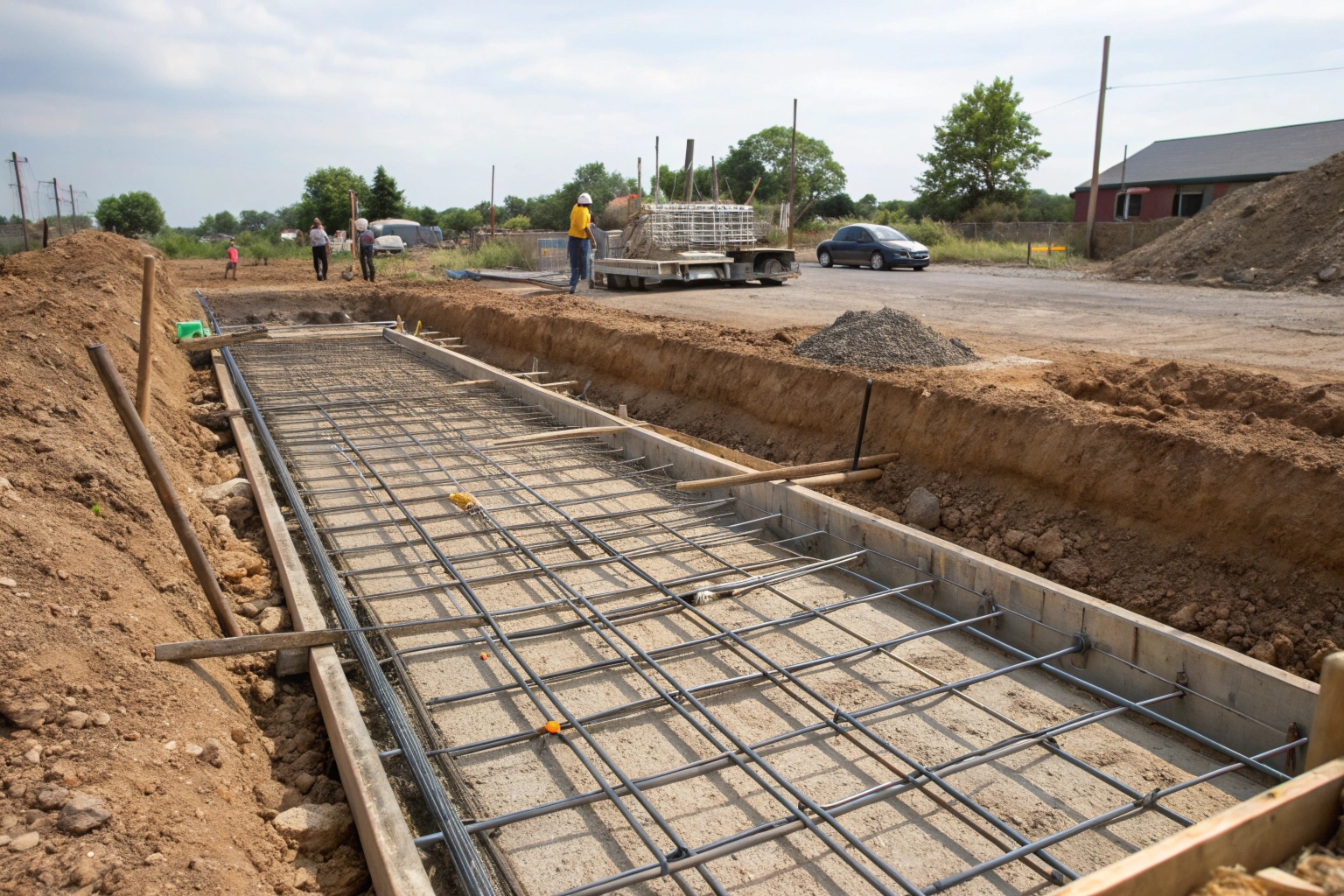
Formwork goes in if we need clean edges, though often the trench walls work fine. Then we place the reinforcement – steel bars running the full length of each footing, tied securely with minimum 50mm concrete cover to prevent rust.
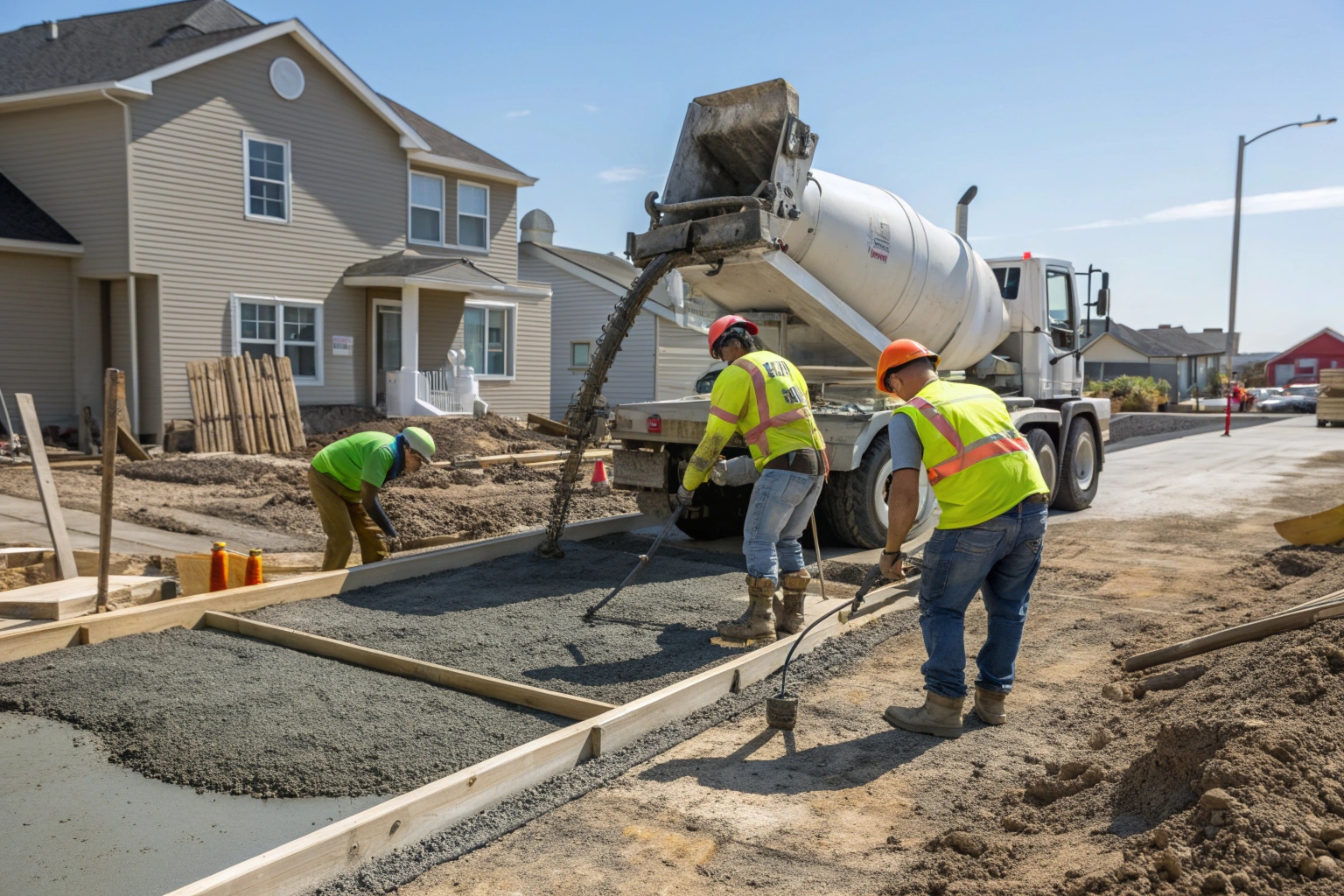
Concrete gets poured in one continuous run for each footing. We use N20 or N25 strength concrete (engineer specified), compact it properly to eliminate air pockets, and finish the top surface level for wall construction.
Curing & Timeline
Concrete needs time to cure before wall construction starts – usually 3-7 days depending on weather and project size. Hobart’s winter temperatures can slow curing, so we plan accordingly and protect fresh concrete from frost damage.
Engineering Requirements & Load-Bearing Specifications
AS 2870 & AS 3600 Compliance
Strip footings in Hobart need to comply with Australian Standards – specifically AS 2870 (Residential slabs and footings) and AS 3600 (Concrete structures). These aren’t suggestions, they’re legal requirements that engineers design to and inspectors check for.
Your structural engineer designs the footings based on your building loads, soil conditions, and site specifics. They’ll calculate the exact width and depth needed so the footing can handle the weight without exceeding your soil’s bearing capacity.
Hobart City Council Approval
Before we pour, you’ll need council building approval with engineer certification for the footing design. For complex sites – steep slopes, poor soil, heavy loads – the engineer might require additional inspections or site-specific calculations. Council inspectors typically sign off after trenches are dug and reinforcement’s placed, before concrete gets poured.
Reinforcement Specifications
Minimum reinforcement is usually two N12 steel bars running top and bottom along the full footing length. Heavier loads or wider footings might need N16 bars or additional reinforcement. Bars overlap by at least 500mm where they join, and corner sections get extra reinforcement to handle stress concentration.
Starter bars – short vertical bars sticking up from the footing – tie your walls into the foundation. This connection’s critical for structural integrity, especially in brick veneer construction where wall loads are significant.
Load Distribution & Safety Factors
The footing width determines how much load per square meter hits your soil. Engineers include safety factors so your footings aren’t running at maximum capacity – they’re designed with buffer room for unexpected loads, soil variations, and long-term performance.
Frequently Asked Questions About Strip Footings
For bulk concrete orders – anything over 20m³ – we typically recommend booking at least 1-2 weeks in advance. Larger pours (100m³+) or projects during peak construction season might need more lead time. That said, we’ve accommodated tight timelines when necessary. Best bet? Call us as soon as you know your pour schedule and we’ll lock in your dates.
A concrete slab covers your entire building footprint – it’s both your foundation and your floor. Strip footings only run under your load-bearing walls, and you build a suspended floor system above them (timber or concrete). Strip footings are common for sloped sites, homes with underfloor access, or when you’re building with raised foundations.
Yes. Hobart City Council requires engineer-designed footings for residential construction. The engineer calculates the footing dimensions based on your soil bearing capacity and building loads. You can’t just use standard dimensions – every site’s different, and the design needs to match your specific conditions.
Absolutely, but they need to be designed for it. Reactive clay soils require wider footings (often 600mm instead of 450mm) to resist ground movement when the clay expands and contracts. That’s why soil testing’s critical – the engineer specs the footings to handle whatever soil you’ve got.
Concrete needs 3-7 days to cure before you’re loading it with wall construction. Winter temperatures in Hobart can slow curing, so we sometimes wait longer in cold weather to make sure the concrete’s reached proper strength. Your engineer or builder will confirm when it’s safe to proceed.
We step the footings down the slope, maintaining proper depth at each level. Stepped footings are standard practice in hillside suburbs like Mount Nelson, Sandy Bay, and West Hobart. The engineering’s more complex than flat sites, but it’s something we handle regularly across Hobart’s sloping terrain.
Costs vary based on soil type, site access, footing dimensions, and how much linear meterage you need. Sloped sites cost more than flat ones. Rock excavation adds to the price. Engineering and council fees are separate. For an accurate quote, we need to assess your specific site and review the engineering specifications.
Get Your Strip Footings Done Right in Hobart
Strip footings aren’t the exciting part of your building project. But they’re the most important part – mess them up and you’re looking at structural problems that’ll haunt you for years.
We’ve poured strip footings across Hobart’s suburbs for 10 years – from flat blocks in Glenorchy to steep hillside properties in Mount Nelson. We work with structural engineers who design for your specific soil conditions, we follow AS 2870 and AS 3600 standards, and we coordinate council inspections so everything’s compliant before concrete gets poured.
You’ll get:
• Engineer-designed footings based on your soil test results
• Proper reinforcement with N12 or N16 steel bars
• Stepped footings for sloped sites done right
• Experienced crew who know Hobart’s soil conditions
• Clear communication through the whole process
• Work that’s built to last 50+ years without settlement
Whether you’re building a new home, adding an extension, or constructing a garage in Kingston, Moonah, or Sandy Bay – we’ll make sure your footings are engineered properly and poured to spec.
Ready to get started? Give us a call on (03) 6170 6070 or fill out our contact form for a free quote. We’ll assess your site, review the engineering requirements, and give you a clear breakdown of what’s involved and what it’ll cost.
Strip footings done properly, first time. That’s what we do.
