
Why Proper Excavation Matters
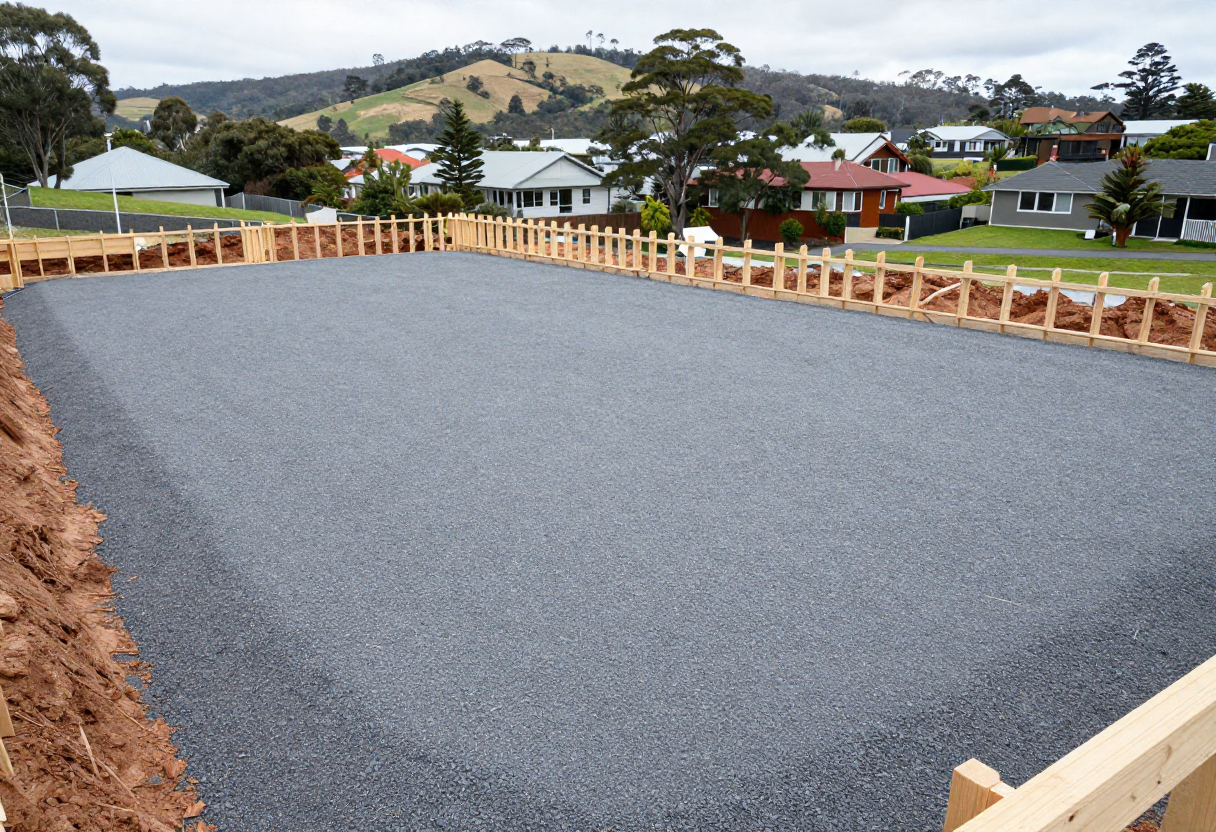
The reality is, proper excavation sets up everything that comes after. Get it wrong – wrong depth, poor compaction, inadequate drainage – and you’re looking at problems that’ll haunt a project for years. We’ve been called in to fix enough of those situations to know how much grief proper preparation saves.
Our excavation services cover house sites, driveways, sheds, patios, retaining wall footings, and commercial developments throughout Hobart and surrounding areas. Whether you’re dealing with a flat block in Glenorchy or a challenging slope in Dynnyrne, we bring the right equipment and the local knowledge to prepare your site properly the first time.
What separates us from other earthmoving operators is simple – we understand how Hobart’s ground behaves. We know which areas are likely to have rock. We know where the water table sits. We know how our 600mm-plus annual rainfall affects excavation timing and drainage planning. And we know that with Tasmania’s building standards and our terrain, there’s no room for shortcuts.

Excavation Services We Provide
Pre-Excavation Site Assessment
Soil Testing and Classification
Geotechnical testing identifies soil type, bearing capacity, and problem areas. Clay content, moisture, and compaction characteristics guide excavation methods.
Underground Service Location
Dial Before You Dig is mandatory. We locate and mark all buried services—water, sewer, stormwater, electrical, gas, NBN—hand-digging to verify exact positions to avoid costly and dangerous hits.
Site Survey and Level Measurements
Accurate levels from a surveyor ensure excavation reaches the correct depth, critical for slab and foundation design.
Excavation Depth Requirements
Excavation depth varies: slabs 150–200mm, footings 600mm+, basements deeper. We follow project plans precisely.
Drainage Pattern Identification
We assess natural drainage, street runoff, and neighboring properties to plan grading and agricultural pipe placement.
Access Evaluation
Site access determines equipment size and excavation efficiency. Narrow driveways, steep approaches, and overhead obstacles can affect time and cost.
Rock and Soil Type Determination
Test holes help identify unexpected rock or soil conditions, reducing surprises and ensuring accurate pricing.
Volume Calculations
Cubic meters of soil are calculated from site plans and surveys to determine equipment, timing, and costs.

Service Location and Protection
Before any excavation, we carefully locate and protect all underground utilities to ensure safety and prevent damage:
Dial Before You Dig: Submit site details to receive utility plans for water, sewer, stormwater, electricity, gas, and NBN.
Marking Services: Approximate locations are marked on site with spray paint or stakes.
Water Mains and Lines: TasWater plans show mains, service lines, and meters; all lines treated as live until verified.
Electrical Cables: TasNetworks marks underground power cables; hand-dug test holes confirm exact locations.
Gas Pipes: Located and hand-exposed where present to prevent leaks and hazards.
Telecommunications: NBN and Telstra cables identified; damage can disrupt service and be costly.
Stormwater Drains: Council and private lines located for proper drainage connections.
Hand Digging Near Services: Excavation within a meter of services is done manually to ensure safety before using machinery.

Base Preparation Standards
Proper base preparation ensures a stable, level, and durable foundation for your concrete:
Excavation to Specified Depth: Dig to the depth specified by your engineer, typically 150–200mm below finished slab level.
Removal of Unsuitable Material: Eliminate soft spots, organic matter, and roots; replace with compacted fill if necessary.
Installation of Crushed Rock or Road Base: Lay 75–100mm of road base or crushed rock to provide a stable, free-draining base.
Compaction to Engineering Requirements: Compact in layers to achieve 95% density or higher as specified by the engineer.
Level Tolerance Specifications: Maintain tight tolerances (usually 10–20mm) to ensure a level surface.
Moisture Content Management: Adjust material moisture to achieve optimal compaction, especially in wet conditions.
Proof Rolling: Test large areas with heavy equipment to confirm stability and identify soft spots.
Ready for Concrete Placement: The prepared base is level, stable, and ready for immediate
Rock Excavation in Hobart
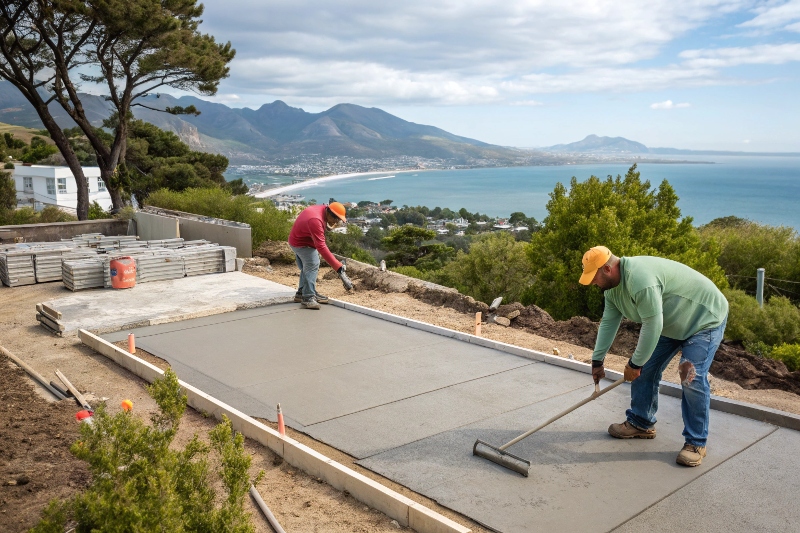
Rock excavation is a common consideration in certain Hobart areas and requires specialized techniques and planning:
Common in Some Areas: Dolerite near the surface is typical in West Hobart, Mount Stuart, and Geilston Bay; depth varies by site.
Rock Breaker Attachment Use: Hydraulic breakers on excavators mechanically fracture rock for removal or in-place breaking.
Removal or In-Situ Breaking: Broken rock may be removed or left if below excavation depth, depending on project needs.
Additional Cost Considerations: Rock excavation is more expensive due to slower work, equipment wear, and possible disposal costs.
Engineering Assessment: Rock can affect foundation design; sometimes beneficial, sometimes requiring deeper footings.
Alternative Foundation Solutions: Engineers may specify rock pads, piers, or other designs if rock is extensive.
Specialized Equipment Requirements: Harder rock may require larger breakers or controlled blasting for commercial projects.
Time Impact on Schedule: Excavating rock takes longer than soil, so timelines are adjusted accordingly.
Soil Removal and Disposal
Efficient soil removal and responsible disposal are key parts of excavation:
Calculation of Excess Material: Volume of surplus soil is measured in cubic meters, with standard tip trucks holding 8–10 m³.
Tip Truck Transportation: Excess soil is loaded and transported to approved disposal facilities.
Approved Disposal Facilities: Only licensed facilities receive soil, with costs varying for clean vs. contaminated material.
Clean Fill Separation: Soil free of contaminants is separated for reuse or cheaper disposal.
Contaminated Soil Disposal: Contaminated soil requires special handling, documentation, and higher costs.
Multiple Loads for Large Excavations: Large projects may require many truckloads, coordinated for efficiency
Project Timeline and Duration
Excavation timelines vary by site size, complexity, and conditions:
Small Residential Sites: Shed bases or small patios take 1–2 days, including excavation, base installation, and compaction.
Standard House Site: Typical house site excavations take 3–5 days, covering prep, bulk excavation, precision work, base installation, and compaction.
Complex Sloping Sites: Hillside sites with cut-and-fill, retaining walls, and detailed drainage can take 2–3 weeks or more.
Rock Excavation Adds Time: Hard rock slows progress; breaking rock may take hours to achieve what normal excavation does in minutes.
Weather-Dependent Scheduling: Rain halts compaction and excavation; Hobart’s wet climate can cause delays
FAQs About Site Excavation in Hobart
When's the best time of year to schedule excavation work in Hobart?
Summer and autumn are your best bet for excavation in Hobart – December through April gives us the driest conditions for compaction work. Winter’s wet season makes compaction nearly impossible some days, and you’ll end up with delays waiting for the ground to dry out enough to work. That said, we do excavation year-round, we just build in more contingency time for winter projects. If you’ve got flexibility, avoid June through August.
Do I need council permits before you start excavating my property?
For most standard residential excavation – house sites, driveways, sheds – you don’t need separate excavation permits because it’s covered under your building permit. Where it gets tricky is if you’re doing major cut and fill near a boundary, altering drainage patterns, or excavating in erosion-prone areas around Hobart’s hillsides. We’ll tell you upfront if your specific site needs additional approvals from Hobart City Council. The builder or designer usually sorts permits, but we flag anything that looks like it’ll need extra approvals.
What happens if you hit rock or other problems we didn't expect?
We stop, assess what we’ve found, and call you before proceeding – no surprises on the invoice. If it’s rock, we’ll tell you how extensive it looks and what the extra cost will be to break through it or work around it. Sometimes we find old foundations, buried rubbish, or soil that’s worse than testing suggested – whatever it is, we discuss options before continuing. Most Hobart excavations go smoothly, but when something unexpected turns up, communication happens before excavators keep digging.
How can I tell if my sloping block is suitable for building on?
Nearly every sloping block in Hobart can be built on – it’s just a matter of how much cut and fill you’ll need and whether retaining walls are required. A geotechnical engineer assesses your specific slope, soil type, and drainage to work out what’s needed. Steeper slopes like you see in parts of West Hobart or Mount Nelson cost more because they need more engineering and bigger retaining walls, but they’re definitely buildable. We’ve excavated sites on slopes that looked impossible, and they’re now solid homes.
Will excavation work damage my neighbors' properties or cause issues?
We take precautions to protect neighboring properties – that’s part of doing the job properly. Vibration from equipment is minimal and won’t crack your neighbor’s walls or foundations. Where we’re working near boundaries, we shore up or batter slopes so there’s no risk of soil movement onto adjacent properties. In Hobart’s tight suburban blocks, we’re often working within meters of other houses, so we’re careful about where spoil gets stockpiled and how close equipment works to fence lines. If there’s any concern about a boundary or shared retaining wall, we flag it before starting.
Should I remove anything from my property before excavation starts?
Clear the work area of anything you value – garden ornaments, pavers you want to keep, plants that can be relocated, outdoor furniture, that sort of thing. We’ll work around established trees if you want them saved, but let us know which ones matter before we start. Make sure there’s clear access for equipment and trucks – move cars, open gates, trim back overhanging branches if they’re blocking the driveway. The clearer the site, the faster we work and the less chance of accidental damage to things you wanted kept.
