
Professionals in residential concrete in Hobart

We’ve been working on Hobart properties for years now, and we’ve learned what actually holds up in our climate. From Sandy Bay to Battery Point, Glenorchy to Kingston, we’ve laid driveways that handle our wet winters, built patios that don’t crack when temperatures drop, and poured foundations that account for the sloping blocks you find all over the city.
Your property deserves concrete work that’s built for where you live. Not generic mainland solutions that fail in three years. Not cheap shortcuts that look okay until the first proper winter hits. We’re talking about properly specified mixes, reinforcement that makes sense for residential applications, and finishes that suit Hobart homes—whether you’ve got a period place in Battery Point or a modern build out in Kingston.

What We Do for Hobart Homeowners
Pathways and Walkways for Safe Year-Round Access
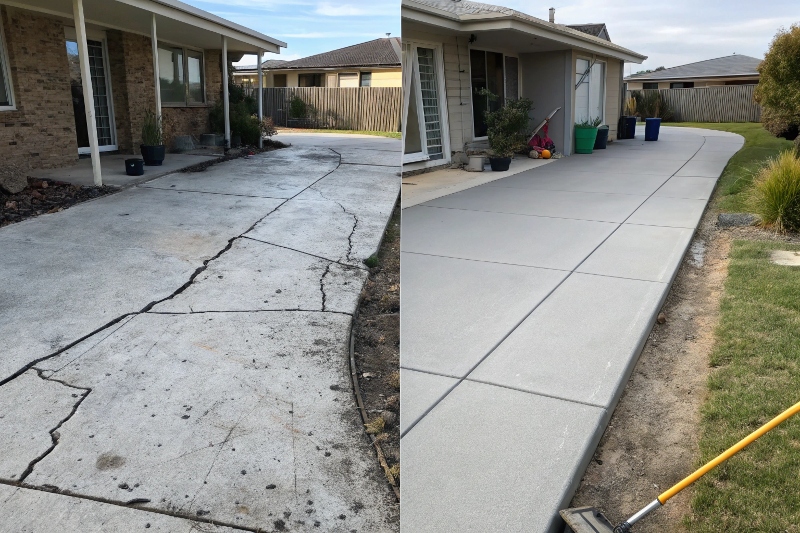
Pathways around your Hobart property need to be safe when it’s wet, which in our climate means they need to be safe most of the year. We’ve all seen those slippery concrete paths where someone just poured a smooth finish and called it done. That’s asking for someone to stack it.
The residential concrete pathways we lay have texture built in. Broom finish is standard because it works. Exposed aggregate looks better and gives even more grip. Whatever finish you choose, it needs to shed water properly so you’re not walking through puddles or dealing with ice in winter.
Width matters more than people think. A pathway that’s too narrow feels cramped and doesn’t handle two people passing comfortably. Too wide and you’re wasting concrete and money. We generally recommend 900mm minimum for main access paths, 1200mm if it’s your primary entry. Side paths can go narrower.
House Slabs and Foundations for New Builds
When you’re building or extending in Hobart, the foundation’s where everything starts. Get this wrong and you’re fixing problems for years. Get it right and you’ve got a solid base that’ll outlast the house itself.
Residential concrete foundations in Hobart need to account for our soil conditions and moisture levels. We’re not building on the dry, stable ground you might find elsewhere. Our ground gets saturated in winter, contracts and expands with temperature changes, and in some suburbs you’re dealing with clay soils that move more than you’d think.
The engineering matters here. We work to Australian Standards AS2870 for residential slabs and footings, but we also apply what we’ve learned from years working on Hobart properties. That means proper compaction of the base, moisture barriers that actually work, reinforcement placed correctly, and edge beams sized appropriately for your soil type.

Retaining Walls for Hobart's Sloping Blocks
Half the properties in Hobart sit on slopes. That means retaining walls, and that means concrete work that needs to handle lateral earth pressure, water management, and the consequences of getting it wrong.
A failing retaining wall doesn’t just look bad—it can undermine your house foundation. We’ve been called to properties where a cheap retaining wall installed five years ago is now leaning, cracking, and threatening the stability of everything above it. That’s what happens when you don’t build to engineering standards.
The retaining walls we construct are engineered properly from the start. Height determines what level of engineering you need. Anything over 1 metre generally requires engineering certification in Hobart. We work with structural engineers who understand local soil conditions and design walls that’ll hold for decades.
Pool Surrounds That Stay Safe When Wet
If you’ve got a pool in Hobart, the concrete around it needs to be non-slip when wet. Not just textured—properly slip-resistant so kids can run around safely and adults aren’t worried about stacking it.
The pool surrounds we lay use finishes specifically chosen for wet conditions. Exposed aggregate is popular because it looks good and provides excellent grip. Honed concrete gives you a smoother aesthetic while maintaining slip resistance. Whatever finish you choose, it needs to meet Australian Standards for slip resistance around pool areas.
Fall and drainage around pools is more complicated than it looks. You need the concrete sloped away from the pool so water doesn’t drain into it, but you also need to manage overflow and splash-out. We design the falls to direct water to drainage points without creating trip hazards or puddles.
Why Hobart Properties Need Concrete That’s Built Different
Unique Local Climate
Hobart’s freeze–thaw winters, constant moisture, and coastal salt exposure put extra stress on residential concrete.
Air-Entrained Mixes for Winter
We use air-entrained concrete so freezing water can expand safely without cracking the slab.
Moisture-Resistant Formulations
Correct water–cement ratios help prevent moisture penetration and long-term surface breakdown.
Salt Protection in Coastal Areas
Low-permeability mixes are used near the coast to slow salt ingress and reduce corrosion and deterioration.
Temperature-Smart Placement
Cooler temperatures mean slower curing, which requires adjusted placement and finishing techniques for best strength.
Controlled, Proper Curing
We manage moisture carefully using curing compounds and timing—avoiding surface weakness or shrinkage cracks.
Our Process for Residential Concrete Projects
Frequently Asked Questions About Residential Concrete in Hobart
What's the best time of year to pour concrete in Hobart?
Spring and early summer are ideal for residential concrete work in Hobart because you get consistent temperatures without the winter cold or summer heat extremes. We can pour year-round if conditions are right, but September through December gives us the most reliable weather and optimal curing conditions. You want to avoid the coldest months when overnight temperatures drop too low, and the wettest periods when ground conditions make base preparation difficult. That said, if you need concrete laid in winter and we get a good weather window, we’ll make it happen—we just need to plan more carefully around forecasts.
How much does a concrete driveway cost in Hobart?
A standard residential concrete driveway in Hobart typically runs between $65-$100 per square metre for basic broom finish, with prices going up for exposed aggregate, coloured concrete, or complex sites. A typical single-car driveway (about 20-25 square metres) might cost $1,500-$2,500, while a double driveway could be $3,000-$5,000 depending on access, slope, and existing surface removal. Sloping blocks around Sandy Bay or Mount Nelson often cost more because of the extra excavation and base work required to get levels right. We’ll give you an exact price after seeing your property because every site’s different and we don’t do ballpark quotes that turn into surprise bills later.
Can you tell if my existing concrete needs replacing or just repairing?
If you’ve got surface cracks less than 3mm wide and the slab’s still level, you’re usually looking at repair rather than replacement—we can fill cracks and reseal to extend the life. When concrete’s settling unevenly, has cracks wider than 5mm, or shows widespread deterioration with spalling and exposed aggregate throughout, replacement makes more sense than patching. In Hobart’s climate, concrete that’s been down 25-30 years and showing multiple issues has probably given you good service and is due for replacement anyway. We’ll come out and give you an honest assessment—sometimes repairs buy you another 5-10 years, sometimes you’re just throwing money at something that needs replacing.
How thick should residential concrete be for driveways in Hobart?
For residential driveways in Hobart, we pour 100mm (10cm) minimum thickness with proper base preparation and reinforcement—that handles regular car traffic without issues. If you’ve got heavier vehicles like trailers or work utes, or you’re on reactive clay soils common around some Hobart suburbs, we’ll go to 125mm thickness for extra durability. The base beneath matters just as much—we need 75-100mm of compacted crushed rock under the concrete to provide stable support and prevent settlement. Thickness alone doesn’t guarantee a good driveway; you need the right concrete mix, proper reinforcement, and adequate base preparation to handle Hobart’s soil conditions and weather.
What makes sloping blocks in Hobart more complicated for concrete work?
Sloping blocks need more excavation to create level areas, require stronger edge support to prevent the concrete sliding downhill, and drainage becomes more critical because water runs toward your house if falls aren’t designed correctly. We see this constantly around Battery Point, Mount Nelson, and the hillside suburbs where most blocks have significant slope—the concrete work costs more because there’s more engineering, more labour, and often retaining elements needed to make it work. Water management on slopes is the biggest issue in Hobart because our rainfall means any drainage mistakes become obvious fast. We’ll design proper drainage and possibly stepped sections or retaining walls to handle the slope safely, which adds to the cost but prevents problems that’d cost much more to fix later.
