

Why Hobart House Slabs Need Special Attention
We’ve been pouring house slabs across Hobart for years now, and we’ve seen what happens when corners get cut. That slab in Sandy Bay that cracked within eighteen months because the builder skipped proper soil testing? The waffle pod system in Mount Nelson that should’ve been specified from the start but wasn’t, leading to movement issues? These are the stories that keep homeowners up at night, and they’re exactly why getting your foundation right matters more than just about any other part of your build.
Local Knowledge Makes the Difference
We handle everything from standard slab-on-ground for level blocks through to suspended slabs for those tricky hillside sites. And yeah, we know the Hobart City Council requirements inside out, because nothing slows down a build faster than compliance issues that could’ve been avoided.
Your new home deserves a foundation that’s designed specifically for where you’re building. Not a one-size-fits-all approach, but proper engineering matched to your site, your soil, and your home design. That’s what we do.

Types of House Slabs We Install in Hobart
New Home Applications Across Hobart
Primary Foundations for New Construction
Most new homes start with a house slab as the primary foundation. It’s the ground floor base that everything else builds from. Single-story homes sit entirely on this foundation, while two-story builds use it as the lower level platform. Either way, getting this right means your entire home starts from a solid, level base.
Knock-Down Rebuild Projects
Replacing an old home with a new build? We handle plenty of knock-down rebuilds where the existing foundation gets removed and we start fresh. Often the old slab wasn’t engineered to modern standards, or it’s deteriorated beyond repair. A new house slab gives you a proper foundation that’ll last decades longer than what you’re replacing.
Dual Occupancy and Subdivision Developments
Building two homes on one block is common now with Hobart’s property prices. Each dwelling needs its own engineered house slab, and we coordinate the whole site to make both foundations work together. Same goes for subdivision developments – multiple slabs, all engineered to suit the specific soil conditions on each lot.
Granny Flats and Secondary Dwellings
Adding a granny flat or secondary dwelling to your property? That needs its own foundation too. We size and engineer these house slabs separately from your main home, making sure they’re built to the same standards even though they’re smaller structures.
Display Homes and Project Builds
We work with builders across Hobart on display homes and larger project builds. These often have specific timelines and quality requirements, and we schedule our concrete pours to keep the build program on track. Display homes especially need perfect finishes since they’re showing off the builder’s work.
Engineering and Compliance for Hobart House Slabs
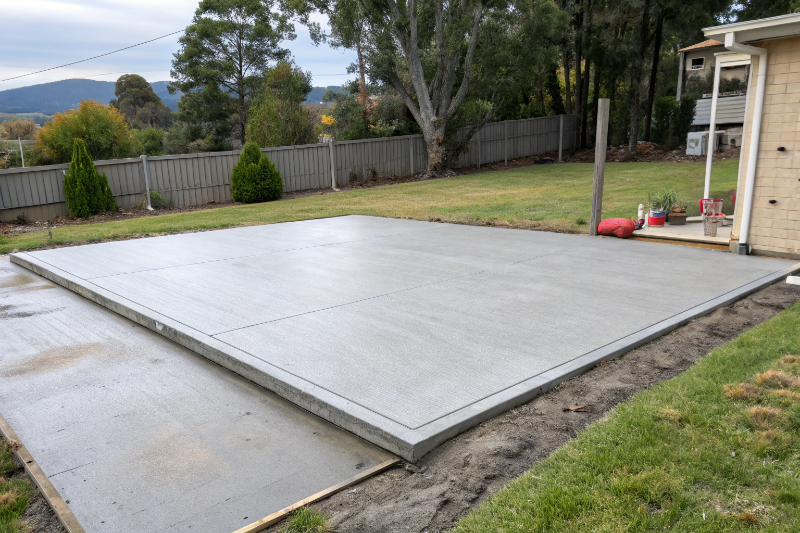
House slabs in Hobart must meet strict engineering and compliance requirements before construction can proceed. Every slab is designed and certified by a structural engineer based on soil tests, site conditions, and house plans, and must comply with Australian Standard AS 2870. In addition, Tasmanian building codes and Hobart City Council approvals are required before pouring begins.
Depending on the site, slabs may also need to meet Bushfire Attack Level (BAL) requirements and contribute to the home’s energy efficiency rating through insulation and thermal performance. Building inspectors review the slab at key stages, including pre-pour and post-cure inspections. All engineering designs, approvals, inspection reports, and certificates are documented and provided for final building certification, ensuring the foundation is compliant, approved, and built correctly from the start.
Quality and Performance of House Slabs
- Level, stable foundation that provides a solid base for your entire home
- Reduced risk of cracking and structural damage by preventing differential settlement
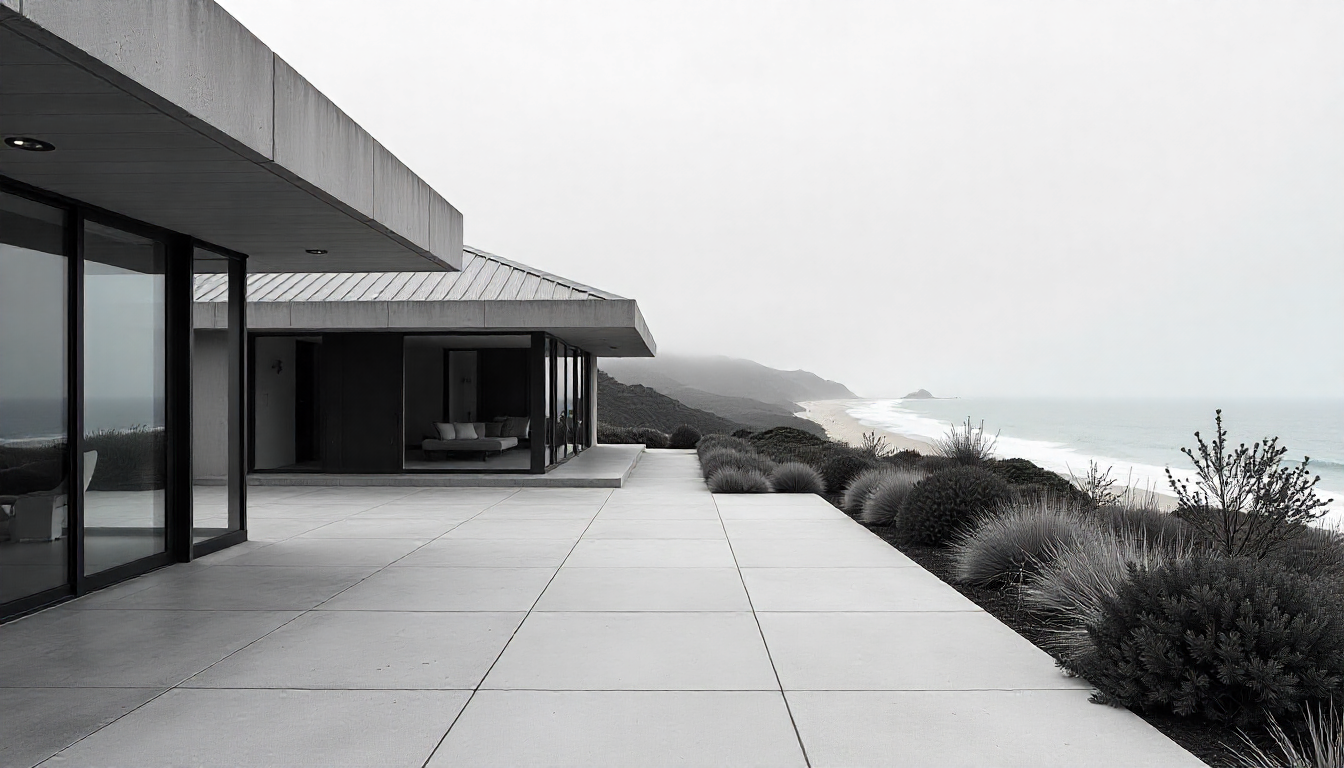
- Built to site-specific engineering for long-term stability and performance
- Effective moisture protection to stop rising damp, mold, and material deterioration
- Designed to last 50+ years when engineered and constructed correctly
- Minimal maintenance required once the slab is installed
- Engineered for Tasmania’s climate, including wet winters and temperature changes
- Protects your entire building investment by supporting everything above it
- Avoids costly repairs later by getting the foundation right from the start
Service Integration in House Slabs
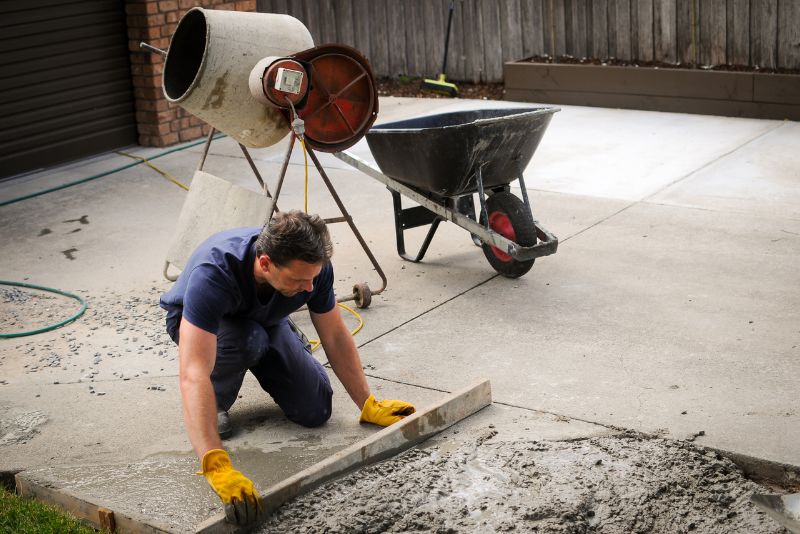
House slabs must be carefully planned to integrate plumbing, electrical, gas, heating, and communication services before concrete is poured. Pipes, conduits, and penetrations are positioned exactly where they’re needed, as changes after pouring are difficult and costly.
Proper coordination ensures features like in-slab plumbing, floor power outlets, gas connections, hydronic heating, and NBN conduits are installed correctly and documented for future access. Working closely with all trades before the pour prevents mistakes, protects the slab’s integrity, and avoids expensive fixes later.
Cost Factors for House Slabs in Hobart
House slab costs in Hobart vary based on site conditions, design requirements, and construction complexity. Factors such as site access, soil type, slab size, and whether the block is flat or sloping all influence pricing. Reactive soils, rock excavation, and complex engineering specifications can increase costs, as can waffle pod systems and extensive service installations.
While these elements affect the upfront price, the house slab is a critical long-term investment. Cutting corners on foundation work to save money can lead to cracking, structural issues, and costly repairs later. Investing in a properly engineered and constructed slab protects the entire home and the value of the build.
Common Hobart House Slab Configurations
House slab configurations in Hobart vary depending on block size, access, slope, and home design. Standard suburban blocks typically use slab-on-ground or waffle pod foundations based on soil conditions, while narrow and corner blocks require more planning around access and layout.
Split-level homes use stepped slabs to suit sloping sites, and extensions to existing homes need new slabs carefully integrated with the original structure. Duplexes and multi-unit developments may use shared or separate slabs, with engineering accounting for fire separation, shared walls, and services. Each configuration is designed to suit the site while meeting structural and compliance requirements.
FAQs About House Slabs in Hobart
How long does the whole process take from soil test to finished slab?
From getting your soil test done to having a cured house slab ready for framing, you’re looking at about 4-6 weeks in Hobart. That includes time for the engineer to design your foundation, getting your building permit from council, scheduling the excavation crew, and then the actual construction and curing period. We often see delays in winter when weather affects scheduling, or if your soil test comes back showing reactive clay that needs additional engineering work. The planning and approval stage takes longer than the physical construction – the slab itself only takes 1-2 weeks once we start.
Can I pour my house slab in winter or should I wait until summer?
We pour house slabs year-round in Hobart, but winter pours need more careful planning and sometimes cost a bit extra. The main concern is protecting fresh concrete from frost – if it freezes before it’s properly cured, you get permanent damage that can’t be fixed. We use concrete additives that help with cold-weather curing, cover and protect the slab overnight, and we won’t pour if the forecast shows temperatures dropping below 2°C in the first few days. Summer is easier because you don’t have these frost concerns, but honestly, if you’re ready to build in winter, we can make it work safely.
What happens if we find contaminated soil or asbestos during excavation?
If we hit contaminated soil or asbestos during excavation for your house slab, work stops immediately until it’s dealt with properly – this is pretty common on older Hobart blocks that had previous buildings. You’ll need a licensed asbestos removalist if it’s asbestos, or soil remediation if it’s contamination, and that adds cost and time to your project that wasn’t in the original budget. The good news is once it’s removed, you know your site is clean and safe to build on. We’ve seen this happen enough in suburbs like North Hobart and West Hobart that it’s worth budgeting a contingency when you’re building on a previously developed block.
Do big trees near the slab cause problems with the foundation?
Yeah, large trees near your house slab can cause real problems, especially in Hobart where we’ve got a lot of established eucalypts and oaks on residential blocks. Tree roots seek moisture and can grow under your slab causing heave, or they dry out clay soils causing the ground to shrink and your slab to settle unevenly. Most engineers will specify a wider zone around the slab where trees need to be removed – usually at least the height of the tree as a minimum distance. If you’re attached to a tree and want to keep it, the engineer might design a deeper foundation or suspended slab in that area, but it costs more and there’s still risk long-term.
How much does a house slab actually cost for a typical Hobart home?
For a standard single-story home in Hobart – say 150-200 square meters – you’re looking at somewhere between $15,000 and $35,000 for the house slab depending on your site conditions. A simple slab on level ground with good soil sits at the lower end, while sloping blocks in places like Mount Nelson with reactive clay requiring waffle pods push toward the higher end. Rock excavation, difficult access, or complex engineering for steep sites can push costs even higher. Best thing is to get a soil test done early so you know what you’re dealing with – that $800 soil test might save you from budget surprises later when you find out you need a more expensive slab system.
What should I look for when the concrete trucks arrive to make sure it's done properly?
When the concrete trucks show up for your house slab pour, you want to see continuous delivery without long gaps between trucks – concrete shouldn’t sit half-poured for hours. Watch that they’re vibrating the concrete as they place it to remove air pockets, and they should be screeding it level as they go, not just dumping and hoping for the best. In Hobart’s climate, check they’re not pouring if heavy rain is forecast – a good concreter will reschedule rather than risk ruining your foundation. If you see them adding water to make the concrete easier to work with, that’s a red flag – it weakens the concrete and you should speak up.
