
Complete Concrete Foundation Solutions for Every Project
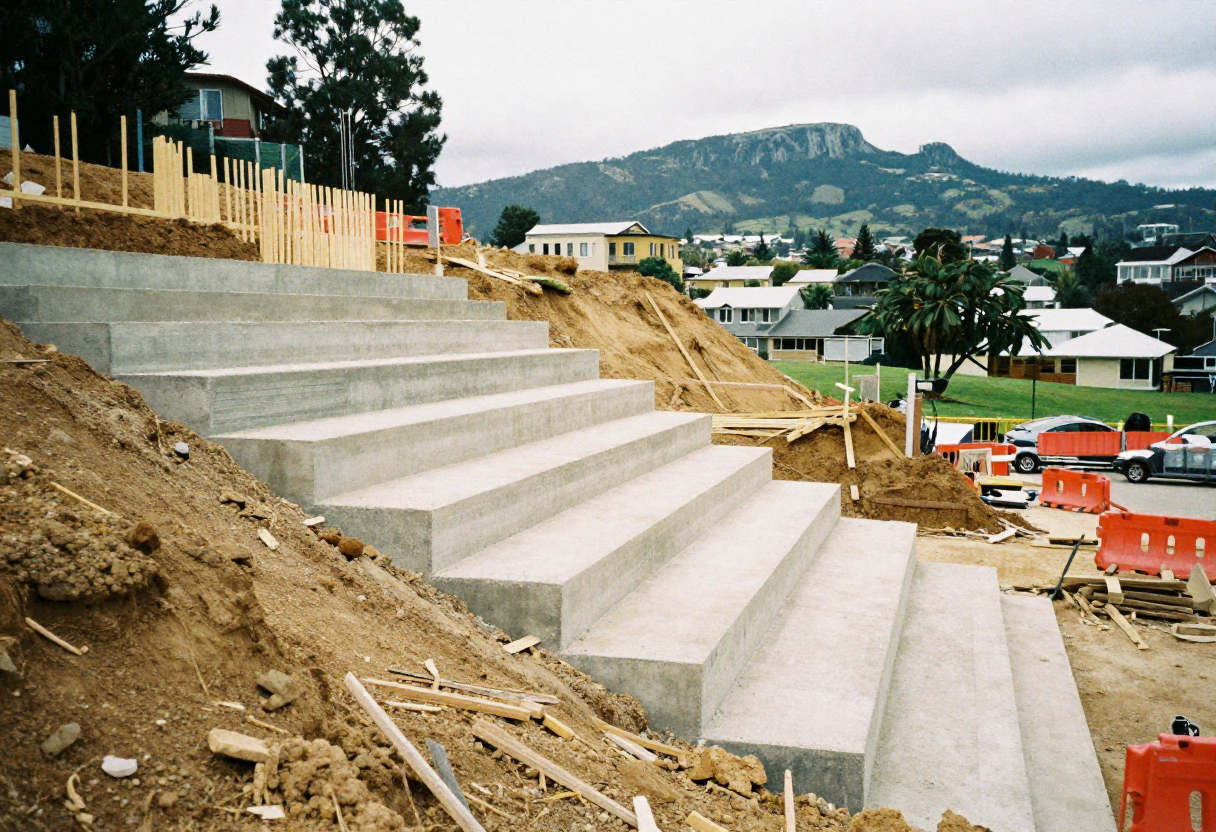
Here’s what sets us apart – we don’t just show up and pour concrete. Every foundation project starts with proper soil testing, geotechnical analysis, and engineering design. We account for Tasmania’s 600mm+ annual rainfall, the frost depth protection you need for winter, and the drainage systems that stop water becoming your enemy. Our work is licensed, our concrete meets the specified strength grades, and every foundation we pour gets the inspections and certifications it needs.
From slab-on-ground for new homes to pier and beam systems for those tricky hillside blocks, strip footings for extensions, or full basement foundations for multi-story builds – we handle it all. And we do it right the first time, because your building’s entire structural integrity depends on what we do below ground level.

Types of Concrete Foundations We Build
Foundation Applications Across Hobart
New Home Construction
Your new home deserves a foundation built to last. We work directly with builders and homeowners to create primary residential foundations that meet structural engineering specifications and comply with Hobart City Council requirements. From the initial soil testing through to final inspection, we handle the complete foundation concrete construction process.
Home Extensions and Additions
We assess your current structure, design foundations that integrate properly, and pour extensions that won’t cause differential settlement or structural issues. Whether you’re adding a bedroom, extending the living area, or building a new wing, the foundation work needs to match your existing building’s specifications.
Second Story Additions
We assess whether your existing footings need strengthening, design reinforced foundation systems, and create the structural base that allows your second story addition to proceed safely. The engineering calculations for these projects are detailed – you’re potentially doubling the load on the existing foundation.
Commercial and Industrial Buildings
Commercial buildings have different requirements than residential – heavier loads, larger spans, and specific engineering needs. We construct foundations for retail premises, warehouses, industrial facilities, and office buildings. These projects involve structural steel integration, service coordination, and foundations designed for equipment loads and operational requirements.
Sheds, Garages, and Outbuildings
Your shed or garage still needs a proper foundation, even if it’s not a habitable structure. We pour concrete bases for garages, workshops, garden sheds, and storage buildings. The foundation prevents movement, keeps the structure level, and provides the stable platform your outbuilding requires.
Retaining Wall Foundation Systems
Retaining walls need foundations that resist lateral soil pressure and prevent movement. We construct footing systems specifically designed for retaining structures, accounting for soil type, wall height, and drainage requirements. These foundations are engineered to prevent the wall from tipping, sliding, or settling.

Compliance and Approvals
Building a foundation in Hobart involves strict approvals and regulatory compliance. A building permit from Hobart City Council is required before work begins, supported by engineering drawings, soil reports, and site plans. All foundation work must comply with the Tasmanian Building Code and relevant Australian standards, verified by building surveyors and inspectors at key stages.
Engineer certifications, geotechnical reports, and inspector approvals ensure the foundation is designed and built correctly, including compliance with Bushfire Attack Level (BAL) requirements where applicable. Detailed documentation is maintained throughout the project, providing proof of compliance for certification, insurance, and future property transactions, while quality checks at each stage ensure the foundation meets all specifications.

Sloping Site Foundations
Building on Hobart’s hillside suburbs comes with unique foundation challenges due to sloping terrain. Areas like Mount Nelson, West Hobart, Sandy Bay, and South Hobart require specialised foundation designs that manage inclines, prevent ground movement, and support long-term stability.
Common solutions include stepped footings, cut-and-fill earthworks with retaining walls, and pier or suspended floor systems for steeper sites. Engineering focuses heavily on slope stability and effective drainage to manage water flow and soil pressure. With the right design and local experience, hillside foundations can safely support homes while taking full advantage of elevated views and challenging terrain.
Reinforcement Specifications
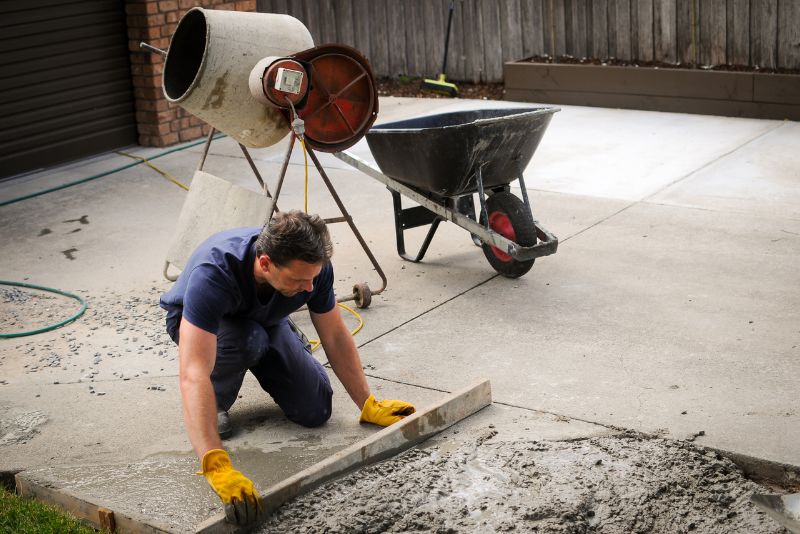
Steel reinforcement provides concrete with the tensile strength it needs, and all reinforcement is installed exactly as specified in the engineering drawings. Engineers select rebar sizes and mesh types based on site conditions and structural loads, ensuring the foundation can safely carry weight and resist movement.
Correct placement, spacing, concrete cover, and secure tying are critical to performance and durability. Special detailing at corners and connections, along with continuous reinforcement and proper overlaps, ensures strength is evenly distributed. When reinforcement is installed to specification, it protects against cracking, corrosion, and long-term structural failure.
Quality and Durability
A well-constructed concrete foundation delivers long-term quality and durability, often lasting 50+ years and outliving most other parts of a building. Proper design and construction prevent settlement and movement, keeping the structure stable and level over time.
Foundations also protect buildings from ground moisture and are engineered to withstand Tasmania’s climate, including frost, heavy rain, and temperature changes. With minimal maintenance required, a quality foundation plays a critical role in building safety, performance, and longevity. Although it represents a small portion of overall build costs, it protects the entire investment by supporting everything above it.
Service Integration
Modern foundations must be planned to accommodate plumbing, electrical, gas, drainage, and communication services. These services are integrated during construction by installing sleeves and conduits in the correct positions, allowing pipes and cables to pass through the foundation without damaging the concrete later.
Coordinating with plumbers, electricians, gas fitters, and builders ensures all services are positioned correctly and comply with regulations. Allowing for future access and upgrades is also essential, making proper service planning during foundation construction critical to avoiding costly modifications down the track.
Common Foundation Issues We Prevent
Poor foundation work can lead to long-term structural and moisture problems. These issues include differential settlement, cracking, dampness, structural movement, uneven load distribution, drainage failures, and frost heave.
By combining proper soil testing, sound engineering, and high-quality construction, these problems are prevented before they start. Correct footing depth and width, effective drainage, moisture barriers, and construction that strictly follows engineering specifications ensure a stable, durable foundation that performs reliably for decades.
Foundation Maintenance
Concrete foundations require very little maintenance when built correctly. Routine checks mainly involve ensuring drainage systems stay clear and water flows away from the building. Minor settlement and small hairline cracks are normal, but growing cracks or noticeable movement should be professionally assessed.
Good water management around the foundation perimeter helps prevent moisture issues. Overall, well-designed and properly constructed concrete foundations are extremely durable and can perform reliably for 50+ years with minimal attention.
FAQs About Concrete Foundations in Hobart
How long does it take to complete a concrete foundation in Hobart?
Most residential foundations on flat sites take about 2-3 weeks from start to finish, though I always tell clients to expect closer to 4 weeks when you factor in weather delays – particularly during Hobart’s wet winter months. Sloping sites around Mount Nelson or West Hobart can push timelines to 4-6 weeks because of the additional excavation, stepped footings, and retaining work involved. We can’t rush curing times regardless of timeline pressure, and winter cold slows things down even more, so it’s better to plan realistic timeframes from the start.
Can you pour concrete foundations during Hobart's winter months?
Yes, we pour foundations year-round in Hobart, but winter work requires extra precautions that summer pours don’t need. We protect fresh concrete with insulating blankets, sometimes use warm water in the mix, and extend curing times because the cold slows the chemical process that gives concrete its strength. The concrete still achieves full design strength – it just takes longer and costs a bit more due to the additional protection measures. I generally recommend scheduling foundation work for spring or autumn if you’ve got flexibility, but we make winter pours work when project timing demands it.
Do I still need soil testing if my neighbor just built next door?
Absolutely – soil conditions can vary dramatically even between adjacent properties, and I’ve seen it firsthand across Hobart suburbs where one block has stable sand and the neighbor’s got reactive clay 20 meters away. Your neighbor’s geotechnical report is their property-specific data, and engineers won’t design your foundation based on someone else’s testing. Council and building surveyors require site-specific soil reports for your permit application anyway, so there’s no getting around it. The few hundred dollars you’d save skipping soil tests could cost you tens of thousands in foundation failures down the track.
What happens if we hit rock during excavation in Hobart?
Hitting rock means your bearing capacity is excellent, but excavation costs go up because we’re drilling or breaking rock instead of digging soil. In areas like South Hobart or Mount Stuart where dolerite sits close to the surface, rock excavation is pretty common and something we plan for during site assessment. The foundation can often be shallower than originally designed since rock has such high bearing capacity, which saves on concrete and reinforcement. We adjust the engineering once we know the rock depth, and while excavation is more expensive, the overall foundation cost sometimes balances out because we need less depth and smaller footings.
How much should I budget for a concrete foundation in Hobart?
Foundation costs vary so widely based on your specific site that I can’t give you a meaningful number without seeing the property, but residential foundations typically run between $15,000-$40,000 for standard homes on relatively flat sites. Sloping blocks in Battery Point or Sandy Bay can push costs to $50,000-$80,000+ once you factor in retaining walls, stepped footings, and difficult access. The best approach is getting soil testing done first, then having an engineer design the foundation – at that point we can give you accurate pricing based on your actual requirements. Don’t choose your foundation contractor on price alone though, because cheap foundation work creates expensive problems that’ll haunt you for decades.
Can I build on steep slopes in suburbs like Mount Nelson?
Yes, we build on steep slopes all the time across Hobart’s hillside suburbs, but the engineering gets more complex and costs increase significantly compared to flat sites. Properties with slopes over about 1 in 3 typically need pier and beam systems rather than slab-on-ground, along with retaining structures and careful drainage design. Some slopes are too steep or unstable for practical construction, which is where geotechnical engineers earn their fees – they’ll tell you if your site is buildable and what foundation system will work. The views from those hillside blocks are fantastic, but you’re paying for foundation engineering and construction that matches the challenge.
