
Expert Driveway Solutions in Hobart

Looking for concrete driveways in Hobart that’ll handle our weather and last for decades? You’re not alone. Between Hobart’s sloping blocks, wet winters, and property owners wanting something that looks good without constant fussing, there’s a lot to get right. We’ve been pouring driveways across Greater Hobart – from the steep slopes in Sandy Bay and Mount Nelson to the heritage properties in Battery Point – and we know what works here.
Whether you’re after a simple single-car driveway or something more decorative with exposed aggregate or colour, we’ll help you figure out what suits your property and your budget. Our concrete driveways are built for Tasmania’s climate, designed to handle the load, and finished to complement your home.

Driveway Applications & Benefits
Hobart Climate Considerations
Suburb-Specific Factors
Driveway design in Hobart varies by suburb and site conditions. In steep areas like Sandy Bay and Mount Nelson, driveways require careful slope design, adjusted concrete mixes, and reinforcement to handle elevation changes and braking forces.
Heritage areas such as Battery Point and North Hobart often have council requirements around appearance, so finishes like stamped or coloured concrete are used to match period styles while meeting modern standards and approval processes.
Council crossover rules can differ between suburbs, covering width, stormwater, and materials, and are addressed early to avoid compliance issues. Standard driveway dimensions are common across Hobart, but lengths and layouts vary by block, making site visits essential to design a driveway that suits each property.

Cost & Value Factors
Concrete driveways offer strong long-term value through competitive upfront pricing and minimal ongoing costs. While pricing varies based on size, finish, and site complexity—especially on sloped blocks—quotes are transparent with no hidden fees.
A well-built concrete driveway can last 30–40 years or more with little maintenance, making it more cost-effective over time than asphalt or pavers. Beyond durability, concrete improves street appeal and resale value by presenting a low-maintenance, high-quality finish buyers notice.
With only occasional cleaning or resealing required, concrete is a one-time investment that avoids repeated repair or replacement costs, making it a practical, buy-once solution for homeowners.
Practical Homeowner Information
Why Choose Our Driveway Installation Service?
When it comes to concrete driveway installation in Hobart, our approach combines time-tested methods with innovative solutions. Whether you’re dealing with the challenging slopes or planning a new driveway, our concrete installation team brings decades of local expertise to every project.
FAQs About Concrete Driveways in Hobart
What's the best time of year to install a concrete driveway in Hobart?
Spring and summer are ideal for concrete work in Hobart because we’ve got more stable temperatures and less rainfall. That said, we can pour driveways year-round as long as we’re not expecting heavy rain or frost within 24 hours of the pour. Autumn’s usually fine too, but we avoid mid-winter when possible because cold temperatures slow down curing and increase the risk of frost damage before the concrete’s properly set. Book early for summer installation since that’s when everyone wants their outdoor projects done.
Can you pour new concrete over my existing asphalt or concrete driveway?
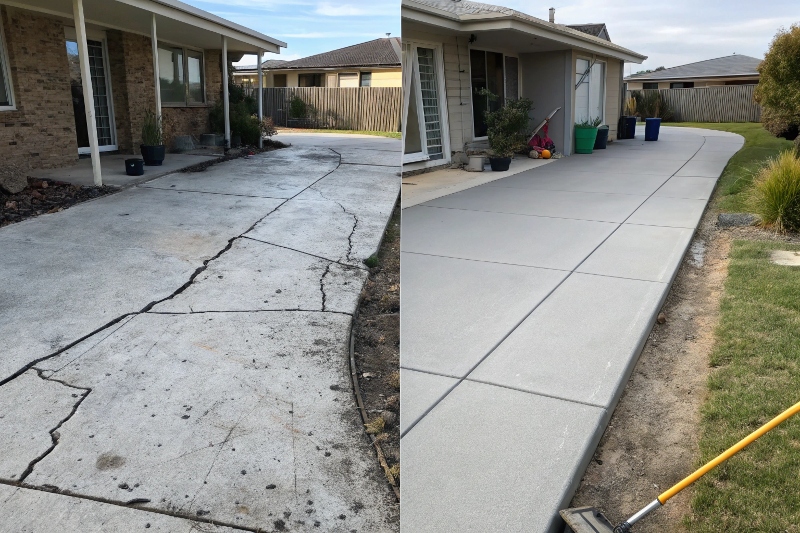
Generally, no – we need to remove the old surface and start fresh. Pouring over existing driveways creates problems with levels, drainage, and bonding, plus you’re just covering up whatever issues caused you to replace it in the first place. The old driveway might be settling or cracking, and new concrete on top’ll just crack along the same lines. We excavate the existing surface, prep the base properly, and give you a driveway that’ll actually last 30+ years.
How long before I can walk on my new concrete driveway?
You can usually walk on it after 24-48 hours, but we typically tape it off for at least 3 days to be safe. The concrete’s still curing and gaining strength during this time, and we don’t want footprints, pet prints, or anything else marking the surface. Kids are naturally curious about new concrete, so keep an eye on them during the first few days. Light foot traffic after 48 hours won’t damage it structurally, but you might leave marks if the surface hasn’t fully hardened.
Do I need council approval for a new driveway in Hobart?
If you’re just replacing an existing driveway within the same footprint, you usually don’t need approval. New driveways or crossovers definitely require a permit from Hobart City Council, especially if you’re creating new access to the street. The approval process typically takes 2-4 weeks, and council checks things like stormwater management, sight lines, and compliance with local standards. We can help with the application or point you in the right direction – it’s pretty straightforward once you know what’s needed.
Will the colour fade on my coloured concrete driveway?
Some fading’s normal over time with any coloured concrete exposed to Hobart’s weather and UV, but quality oxide colours hold up well for years. We use colouring agents that go through the whole slab, not just surface treatments, so even if there’s slight fading it’s still coloured underneath. Sealing your driveway every few years helps protect the colour and keeps it looking vibrant. Most fading happens gradually over 10-15 years, and even then it’s usually just a slight lightening rather than dramatic colour loss.
What if tree roots are affecting my driveway area?
Tree roots are a common issue around Hobart, especially with established gums and other native trees on older properties. We’ll need to remove any roots in the excavation area, but large trees close to the driveway can continue pushing roots underneath over time. Sometimes we recommend root barriers or choosing a driveway location that avoids the main root zone if possible. If you’ve got a significant tree that’s protected or that you want to keep, we’ll work around it, but you need to know roots might cause issues down the track.
