
What We Handle in Bulk Excavation Projects
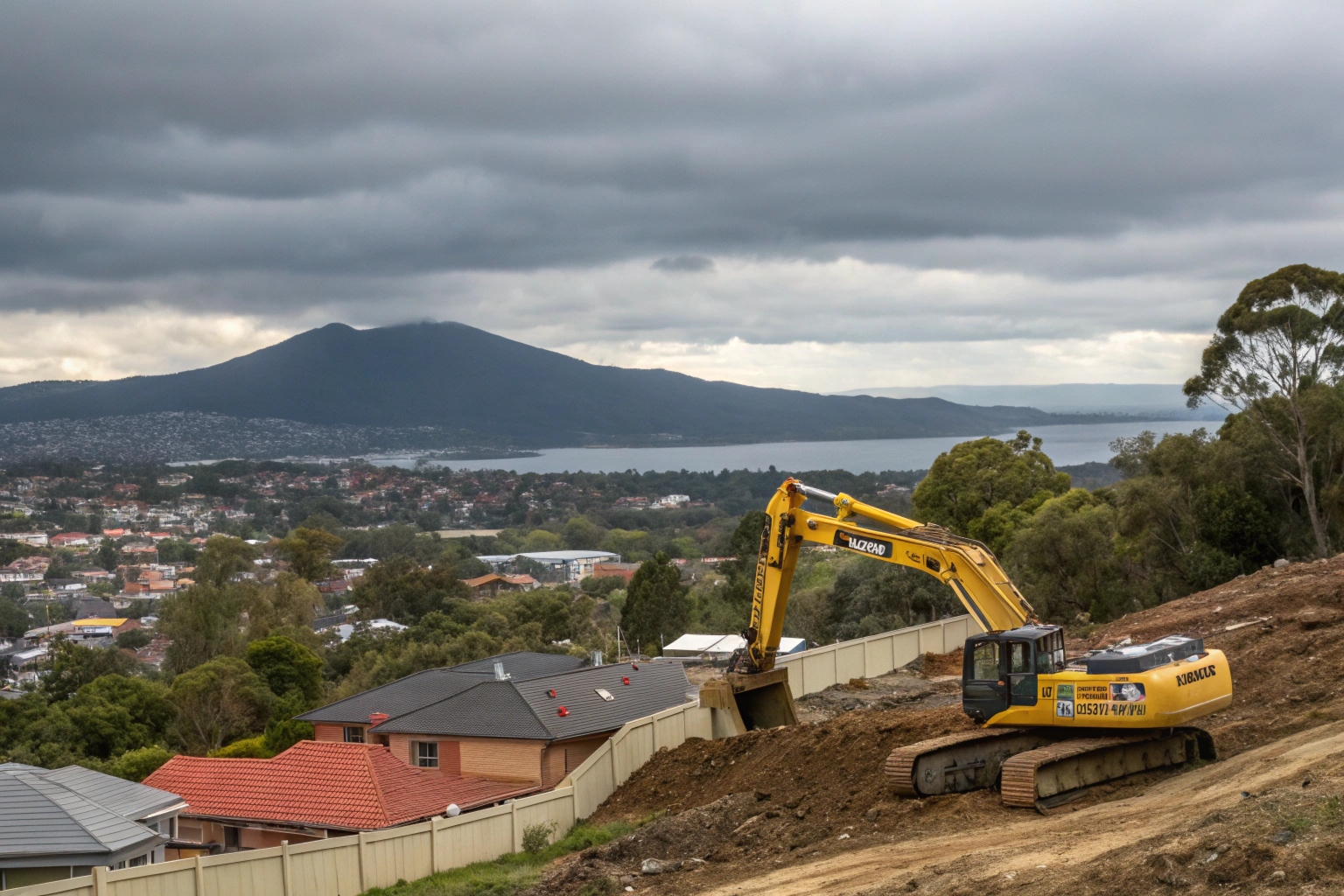
Our bulk excavation services in Hobart cover the full range of large-scale earthworks that developers and builders need for their projects.
Site clearing and building platforms are where most major developments start. We strip topsoil, remove vegetation, and create level construction areas on sites that might’ve been sloped bushland a few weeks earlier. Whether you’re building a single large home on a hillside block or preparing multiple building pads for a subdivision, we’ve got the machinery to shape the ground to your engineer’s specifications.
Subdivision earthworks keep us busy across Hobart’s growth corridors. Multi-lot developments need roads cut in, building platforms formed, and stormwater infrastructure installed before individual lots can be sold off. We coordinate with civil engineers to balance cut and fill across the entire site, minimising the amount of soil that needs trucking off-site.
Commercial and industrial sites often require substantial basement excavation for underground car parking or storage. Shopping centres, warehouses, and office buildings all start with major earthworks. We’ve excavated sites for everything from small industrial units to large retail developments.
Retaining wall excavation goes hand-in-hand with most hillside projects around Hobart. Creating usable flat ground on slopes means cutting back into the hill and building engineered retaining systems. We work to the excavation lines your engineer provides, leaving stable batters ready for wall construction.
From civil infrastructure projects to retirement villages, if it involves shifting serious volumes of earth, we can handle it.

Cut & Fill Operations on Hobart's Sloped Sites
Most bulk excavation work in Hobart involves cut and fill operations – you’re taking earth from the high side of a site and using it to build up the low side. Done right, this creates level building platforms without trucking loads of soil off-site or importing expensive fill material.
The key to cost-effective earthworks is getting your material balance sorted before the machines start moving. Your civil engineer calculates how much earth needs cutting and how much you’ll need for filling. When these numbers match up well, you’re keeping costs down and timelines tight. When they don’t, you’re either paying for imported fill or disposal fees for excess soil.
Creating stable platforms on Hobart’s hillside terrain takes more than just pushing dirt around. The cut face needs proper battering for stability, the fill needs compacting in layers, and you often need retaining walls engineered into the design. We’ve shaped building platforms on some seriously steep blocks around Mount Nelson and West Hobart where the engineering had to be spot-on.
Compaction requirements can’t be skipped when you’re building on fill. Every layer goes down in 200-300mm lifts and gets compacted to the density your engineer specifies. This prevents settlement issues years down the track when buildings are sitting on top of your earthworks.
The goal is handing over a site that’s rock-solid stable, properly drained, and ready for construction – not just something that looks flat.
Site Challenges We Deal With in Hobart
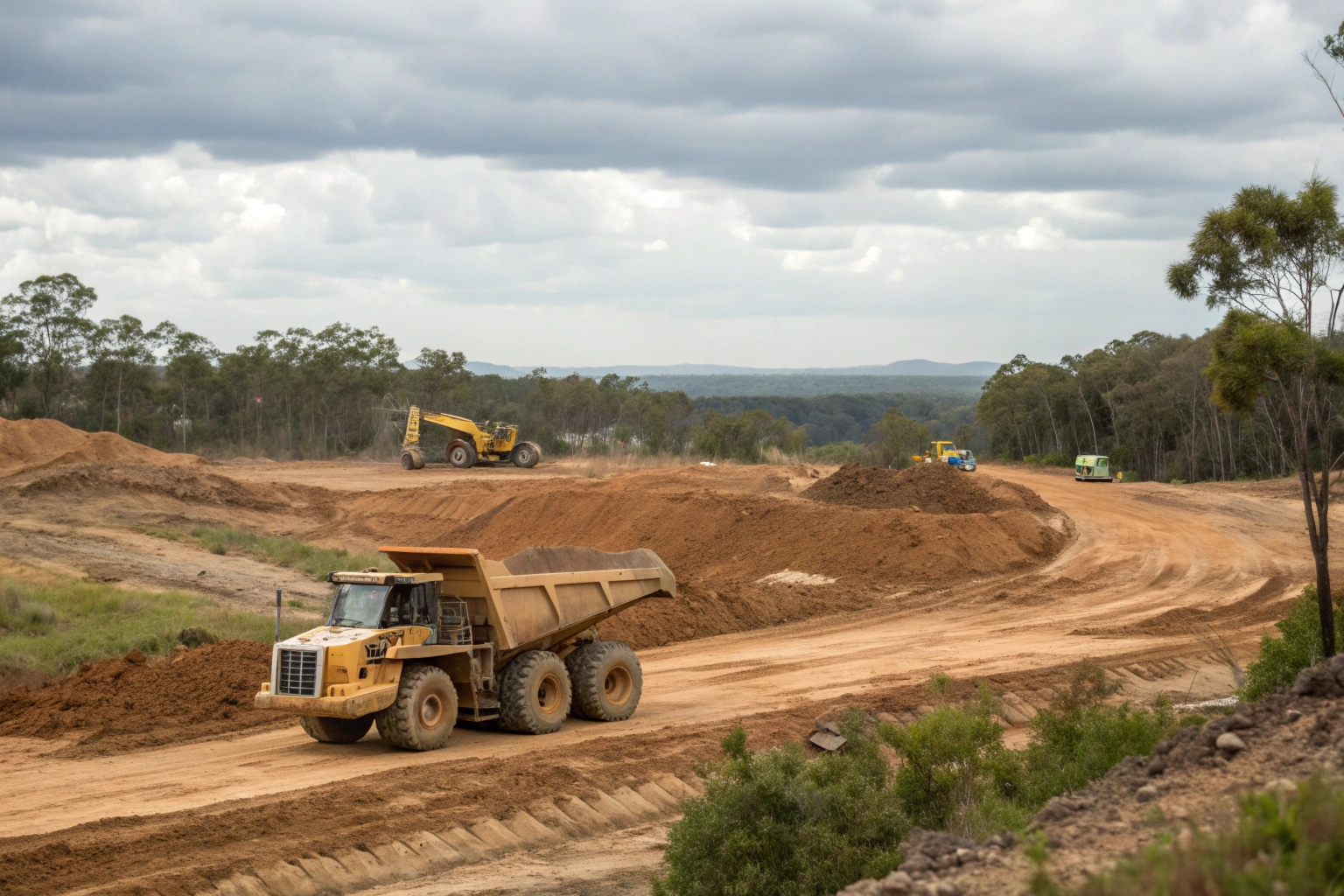
Hobart throws up some unique challenges when you’re moving large volumes of earth, and knowing how to handle them separates experienced contractors from operators who’ve only worked on flat ground up north.
Sloping terrain is pretty much standard across most of Hobart’s suburbs. Sandy Bay, Dynnyrne, Mount Stuart, South Hobart – these aren’t flat parcels waiting for a quick scrape. You’re cutting into hillsides, managing steep batters, and dealing with stability issues that don’t exist on level sites. Rock can show up when you’re excavating into slopes, particularly around the eastern shore and some western suburbs. Sometimes you’re chipping through dolerite that needs hammers or even blasting on larger projects.
Clay and reactive soils are common across the Hobart area, and they behave differently depending on moisture content. These soils expand when wet and shrink when dry, which affects your compaction work and drainage design. Getting the moisture content right during compaction matters more here than it would with sandy soils.
High rainfall impacts scheduling on every bulk excavation project in Tasmania. Hobart gets rain year-round, but winter months can shut down earthworks for days at a time. Wet clay turns into a bog that machines can’t work in, and you can’t compact properly until things dry out. We plan around weather and have contingencies ready.
Access limitations come up regularly in established suburbs where you’re developing an infill site. Getting 30-tonne excavators and articulated dump trucks through residential streets takes planning and sometimes traffic management.
Equipment & Engineering Behind Large-Scale Earthworks
The machinery required for bulk excavation is a whole different league from smaller residential jobs. We’re talking 30 to 50-tonne excavators that can shift serious volumes of earth in a day, bulldozers for spreading and levelling material across building platforms, and articulated dump trucks that haul 20-30 cubic meters per load.
Our fleet setup includes graders for final level preparation, drum and pad-foot compactors for different soil types, and water trucks for dust suppression when conditions are dry. Having the right gear on-site means we’re not waiting around for equipment to be delivered or trying to make do with undersized machines.
But the machinery is only half the picture. Engineering input guides every bulk excavation project from the planning stage right through to handover. Geotechnical engineers tell us what the soil conditions are like and what compaction densities we need to achieve. Civil engineers provide the design levels, drainage requirements, and cut-fill calculations that keep the project on track.
Hobart City Council approvals and environmental management plans need to be in place before earthworks starts. We work to AS 3798 guidelines for earthworks and follow erosion and sediment control requirements that protect waterways during construction. Survey control happens throughout the job – initial site establishment, regular checks during bulk excavation, and final verification before we hand over.
Quality assurance documentation tracks every stage, proving the work meets engineering specifications when building certifiers and future owners want to see records.

Project Timeline, Costs & Material Management
How long does bulk excavation take? Depends entirely on the volume you’re shifting and what the site throws at us. A smaller site moving 500 to 1000 cubic meters might wrap up in a week or two. Medium-sized projects between 1000 and 5000 cubic meters usually run 2 to 6 weeks. Large developments shifting 5000 cubic meters or more can take anywhere from 2 to 6 months, particularly when you’re staging the work around other trades.
Weather plays a bigger role in Hobart than it would in drier climates. Winter earthworks can stretch out when rain shuts down compaction work for days at a time. We build weather delays into our scheduling so you’re not caught off guard.
Cost-wise, bulk excavation typically runs $15 to $50+ per cubic meter, but that range depends on several factors. Rock excavation costs more than shifting clay or topsoil. If your cut and fill balance is off and you’re trucking excess soil to disposal sites, haulage costs add up quick. Importing quality fill when your on-site material isn’t suitable also impacts the budget. Site access matters too – tight residential streets cost more to work in than wide-open greenfield sites.
Material management starts with stripping and stockpiling topsoil for reuse in landscaping later. We sort fill material as we go, keeping quality material separate from unsuitable stuff. Excess soil gets tracked for disposal documentation, and if you need imported fill, we coordinate delivery timing so trucks aren’t sitting around waiting. Good material management keeps costs down and the site organised.
Frequently Asked Questions About Bulk Excavation in Hobart
Most bulk excavation projects run between $15 and $50 per cubic meter, but your actual cost depends on site conditions, rock content, cut-fill balance, and whether you need to import or export material. We provide detailed quotes after assessing your site and reviewing engineering plans.
We can work in winter, but there’ll be weather delays when heavy rain makes the ground too wet for compaction. Clay soils need proper moisture content for compaction to meet engineering specs. We schedule around weather forecasts and plan for seasonal delays.
Yes, any major earthworks in Hobart require development approval from the council. You’ll also need erosion and sediment control plans, and potentially environmental management plans depending on site size and location. We can guide you through what’s needed.
If your site has more cut than fill, excess soil gets trucked to approved disposal sites. We track all material movements and provide documentation for council records. Sometimes we can coordinate with other local projects that need fill material, which can reduce your disposal costs.
Once we’ve completed earthworks, compaction testing, and final survey verification, your site is ready for construction. Most handovers happen within days of finishing, assuming all engineering sign-offs are complete.
Get Your Bulk Excavation Project Started
Planning a major development in Hobart and need earthworks done right? We’ve got the machinery, the experience, and the engineering backup to handle bulk excavation projects across Tasmania.
Whether you’re preparing a subdivision in Kingston, excavating a commercial site in Glenorchy, or creating building platforms on sloped land in Sandy Bay, our team knows how to move serious volumes of earth efficiently. We work alongside your engineers and surveyors to deliver sites that meet specifications and stay on schedule.
No project too large. From 500 cubic meters to 50,000+ cubic meters, we scale our equipment and crew to match your timeline and budget. Our fleet of large excavators, dump trucks, and compaction gear means we’re not waiting around for machinery to show up – we bring what’s needed from day one.
Don’t let your development timeline blow out because of earthworks delays. Get in touch now for a detailed quote on your bulk excavation project. We’ll review your plans, assess site conditions, and give you straight answers on timing and costs.
Call us today or send through your project details and we’ll get back to you with a comprehensive proposal. Let’s get your site ready for construction.
