
Types of Concrete Footpaths We Build Around Hobart
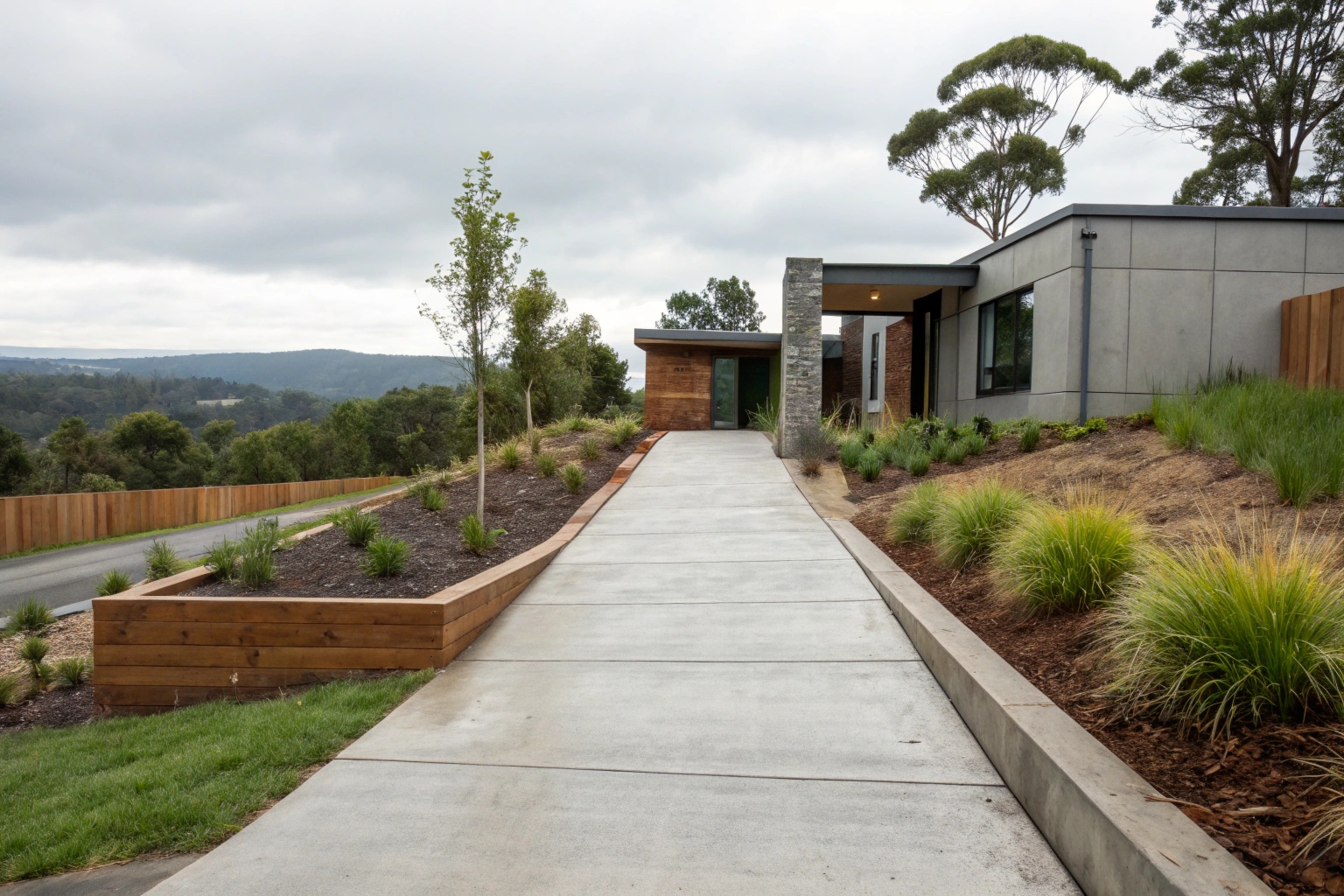
Not all footpaths are created equal, and what works for a simple garden path won’t cut it for a commercial business frontage. Here’s what we’re actually building around town.
Residential Pathways
Your standard residential paths are what most Hobart homeowners need. Front entry paths that run from your driveway or street to your front door – usually about 1.2 metres wide so two people can walk side-by-side without doing that awkward shuffle thing. Side access paths are narrower, maybe 900mm, just enough to get to your backyard without trampling the garden beds. And garden pathways? Those wind through your landscaping, connecting different outdoor areas without turning your lawn into a mud track during winter.
Commercial & Public Footpaths
If you’ve got a business, you need something that handles heavier foot traffic and meets council requirements. Shopping centres, office complexes, business frontages – these paths need to be wider (typically 1.5 to 2 metres), properly graded for drainage, and compliant with disability access standards. Same goes for public pathways in parks and community spaces. Council’s pretty strict about these, and rightly so.
Disability Access Pathways
Here’s where things get specific. DDA-compliant pathways for wheelchair and mobility scooter access aren’t just “nice to have” – they’re required by law in certain situations, and honestly, they’re just good sense if you’ve got aging parents visiting or you’re thinking about your own future mobility. We’re talking gradual slopes (not steep ramps that feel like you’re climbing Mount Wellington), smooth finishes, proper width, and tactile paving where needed.

Footpath Finish Options That Actually Work in Hobart
So you’ve decided you need a new footpath. Now comes the fun part – choosing what it’ll look like. And yeah, it’s more options than just “grey concrete.”
Standard Broom Finish
This is your workhorse finish, and there’s a reason it’s so popular around Hobart. We take a stiff broom across the wet concrete, creating those fine parallel lines you’ve seen on basically every footpath in town. Why? Slip resistance. When it’s bucketing down rain in July or there’s frost on the ground, you want texture underfoot. It’s not fancy, but it works, it’s cost-effective, and it lasts forever. Perfect for side access paths, utility areas, anywhere function matters more than looks.
Exposed Aggregate
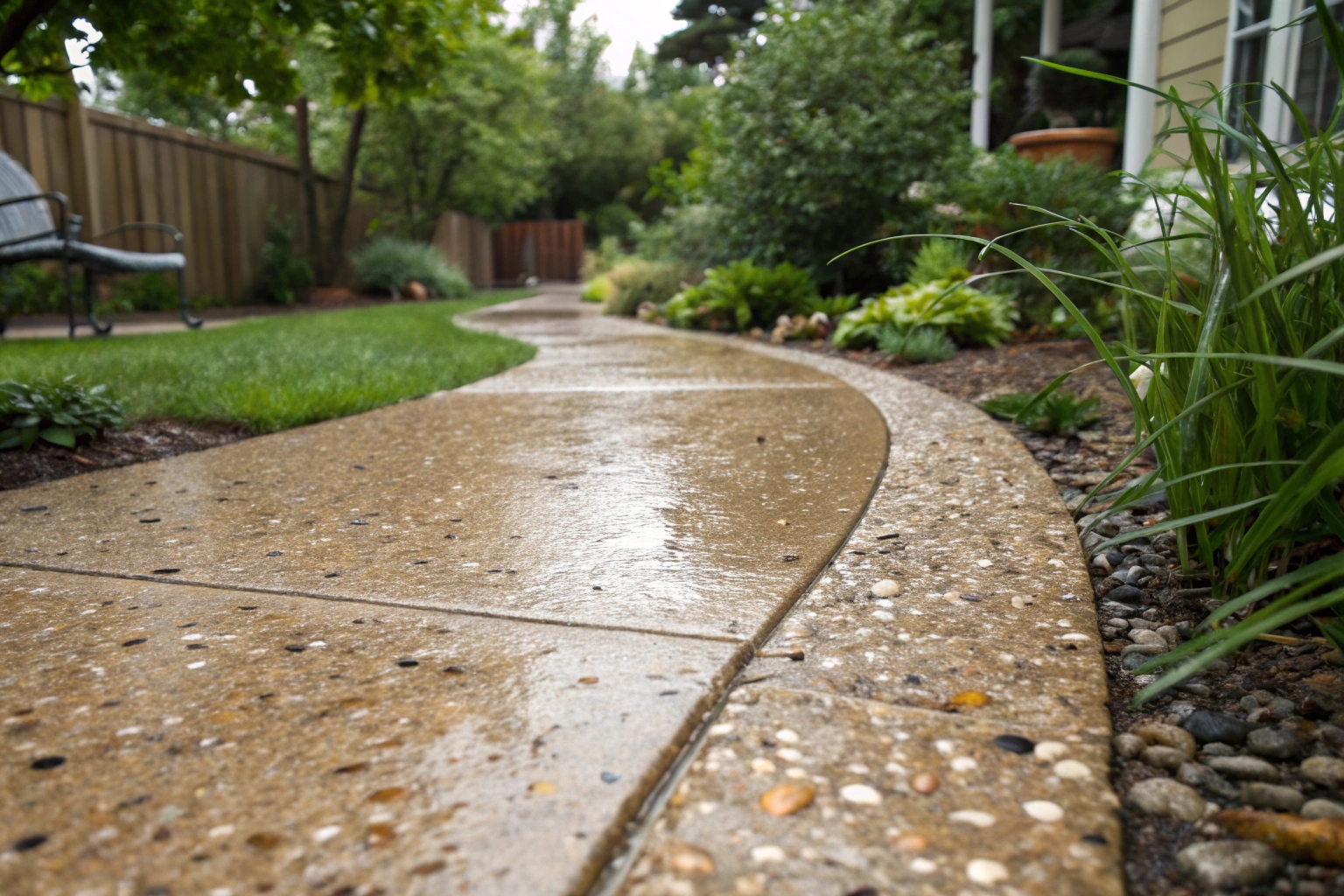
Now we’re talking decorative. This is where we wash back the surface to reveal the stone aggregate underneath – gives you that high-end, textured look you’ve probably seen in Sandy Bay or Battery Point. Comes in different stone colours (natural, charcoal, cream, even coastal blends), and it’s slip-resistant without being rough on bare feet. Costs about 20-30% more than plain concrete, but if you’re doing your front path and want it to look sharp, it’s worth considering.
Coloured Concrete
Standard concrete’s that typical grey colour, which is fine, but maybe doesn’t match your brick or weatherboard. Coloured concrete lets you add earth tones, charcoal, terracotta – whatever complements your home’s exterior. The colour’s mixed right through, so it won’t wear off like paint. Popular for front entry paths where you want a bit more visual appeal.
Plain Grey
And hey, sometimes plain grey’s exactly what you want. It’s the most affordable option, it’s clean-looking, and if the path’s tucked down the side of your house where nobody really sees it anyway, why spend extra on decorative finishes? We’re not gonna upsell you on exposed aggregate for a back pathway to your bins.
Safety & Accessibility Standards for Hobart Footpaths
This is where things get a bit technical, but stick with us because it actually matters – especially if someone’s gonna trip and hurt themselves on your property.
Slip-Resistant Finishes
Here’s the thing about Hobart winters – they’re wet. Like, really wet. And if your footpath’s too smooth, it turns into a slip-and-slide the second it rains. That’s why we always recommend textured finishes for outdoor pathways. The broom finish we mentioned earlier? That’s your baseline for slip resistance. Exposed aggregate’s even better because those exposed stones give you natural grip. We’ve seen too many polished concrete paths around town that look fantastic but are downright dangerous when wet – not something you want leading to your front door.
DDA Compliance Requirements
If you’re building footpaths for public access – think rental properties, commercial spaces, or anywhere the public visits – you need to meet Disability Discrimination Act standards. That means maximum gradients of 1:14 for ramps (some exceptions allow 1:8 for short distances), minimum 1.2 metre width for single wheelchair access, and proper landings every 9 metres if you’re on a slope. Sounds complicated, but we deal with this stuff regularly and know exactly what council wants to see.
Managing Slopes on Hobart Properties
Let’s be real – half of Hobart’s built on hills. Your property’s probably got some slope to it, and that affects how we build your footpath. Too steep and wheelchairs can’t use it, elderly folks struggle, and you’re creating a water slide when it rains. We calculate the fall properly – enough gradient for water to run off, but not so much that it’s difficult to walk on. For properties in Lenah Valley, West Hobart, Mount Nelson – anywhere with serious slope – this becomes critical planning.
Even Surfaces & Trip Hazards
You know what causes most pathway accidents? Uneven surfaces. A 10mm lip where two slabs meet, tree roots pushing up sections, or settled areas creating dips. That’s why proper ground preparation matters – we’re not just slapping concrete on dirt and hoping for the best. Compacted base, proper formwork, control joints in the right spots – all that prevents the settling and cracking that creates trip hazards down the track.
Hobart-Specific Footpath Considerations
Building footpaths in Hobart’s not the same as doing it on the mainland. We’ve got our own set of challenges here, and if you don’t account for them upfront, you’ll be dealing with problems later.
Council Requirements & Street-Facing Paths
If your footpath connects to council infrastructure or runs along your street frontage, you’ll need to deal with Hobart City Council requirements. They’re pretty particular about things like width, materials, drainage connection points, and how your path ties into existing council footpaths. Some streets have specific requirements about reinstatement if you’re replacing an old path. We deal with council regularly and know what they want – saves you the hassle of back-and-forth permit applications.
Drainage in Tasmania’s Climate
Hobart gets about 600mm of rain a year, and when it rains, it properly rains. Your footpath needs to shed water, not pool it. We’re talking proper falls (usually 1-2% gradient), drainage integration with existing stormwater systems, and sometimes channel drains if you’re in a low-lying area. Properties in Glenorchy and Moonah often have drainage challenges – the last thing you want is your new footpath directing water into your house or creating puddles that freeze over in winter.
Frost-Resistant Concrete Mix
Yeah, Hobart gets cold. Not Arctic cold, but cold enough that standard concrete mixes can struggle with freeze-thaw cycles. When water gets into concrete, freezes, expands, then thaws – that’s what causes spalling and surface damage over time. We use air-entrained concrete mixes for footpaths that’ll face winter weather. Costs a bit more, but it means your path won’t start flaking apart after a few cold winters.
Managing Sloping Terrain
Got a property on a hill? Join the club – half of Hobart’s suburbs are built on slopes. Lenah Valley, West Hobart, Mount Stuart, Dynnyrne – these areas need careful planning for footpaths. Too steep and it’s not accessible, too many steps and elderly visitors struggle. Sometimes we’re incorporating gentle ramps, sometimes it’s stepped sections with landings, sometimes it’s working with the natural contour. Each property’s different, and we’ll work out what actually makes sense for yours.
Heritage Area Considerations
If you’re in Battery Point, South Hobart, or other heritage zones, council’s got specific requirements about materials and aesthetics. They want new work to complement the historical character, which usually means sticking to traditional finishes and colours. We’ve done enough work in these areas to know what gets approved and what doesn’t – saves you the headache of designing something that council rejects.
Why Concrete Footpaths Last Decades in Hobart
You’re not doing this project for fun – you want something that’ll still be there when you’re thinking about retiring. Here’s why properly installed concrete footpaths are basically a set-and-forget solution.
Weather-Resistant in Tasmania’s Climate
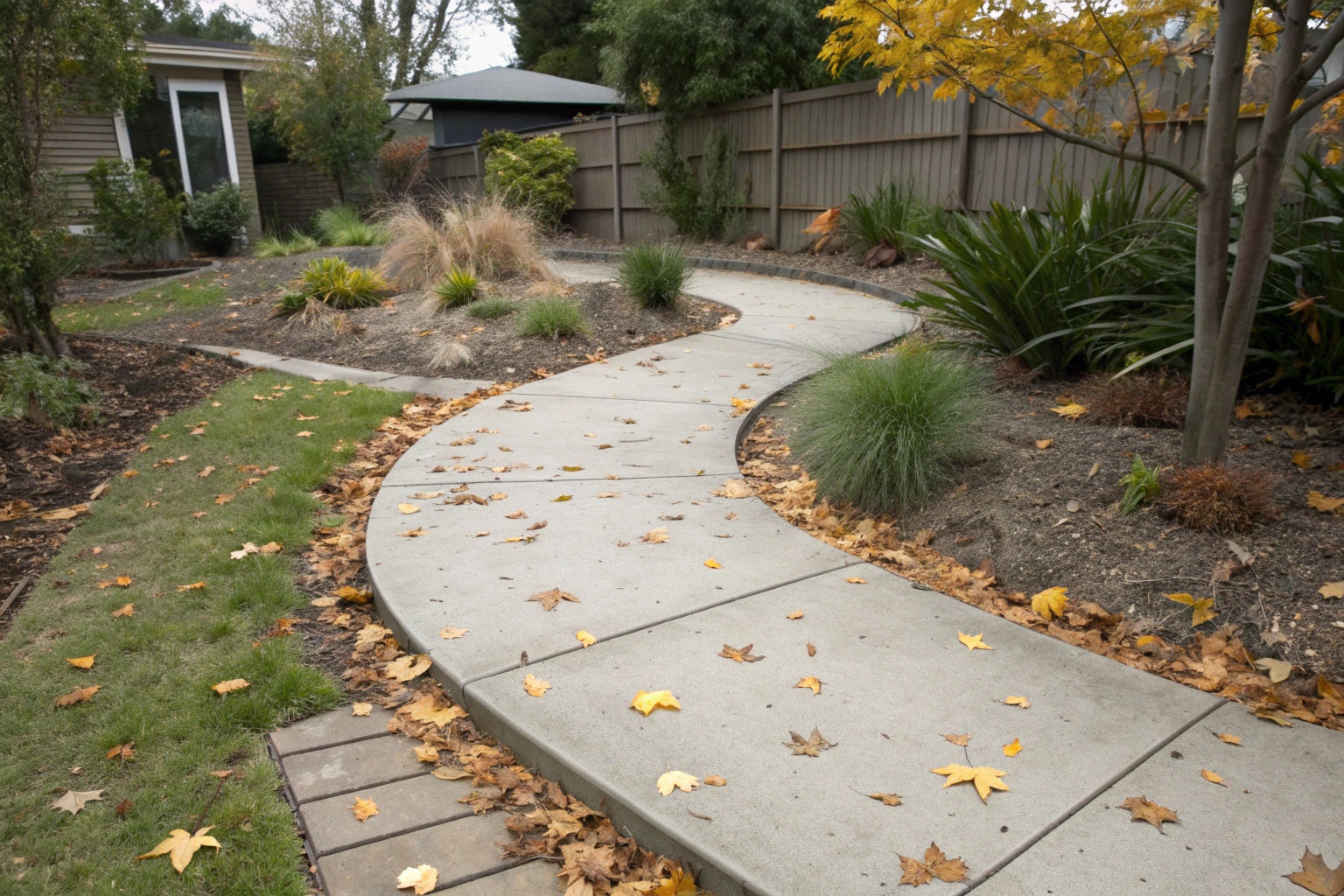
Concrete handles Hobart’s weather better than pretty much any other footpath material. Those wet winters we get? No worries – concrete doesn’t rot like timber decking, doesn’t get slippery like some tiles, and doesn’t grow moss like old bricks do. Summer heat? Concrete stays stable, doesn’t warp or expand like composite materials. And when we get those occasional frosty mornings, a properly mixed and finished concrete path just shrugs it off.
Minimal Maintenance Requirements
Here’s what maintaining a concrete footpath looks like: occasional sweep, maybe hose it down once a year, done. That’s it. You’re not resealing it every two years like pavers, not replacing cracked tiles, not scraping weeds out of gaps. We’ve got paths around Hobart that were poured in the ’80s and are still going strong with basically zero maintenance. Compare that to the time and money people sink into maintaining timber paths or constantly releveling pavers.
Proper Installation Prevents Cracking
Yeah, concrete can crack – but it shouldn’t if it’s done right. That’s why we’re obsessive about base preparation, proper reinforcement (mesh or rebar depending on the application), correct concrete thickness, and control joints in the right spots. Most cracked footpaths you see around town? Either no base prep, too thin, or someone skipped the reinforcement to save fifty bucks. False economy – you end up paying way more to fix it.
25+ Year Lifespan
When we pour your footpath properly – good base, right concrete mix, correct thickness, proper finishing – you’re looking at 25 to 30+ years minimum. We’re still seeing paths we poured 20 years ago in Moonah and Glenorchy that look nearly as good as the day we finished them. That’s the thing about concrete – the upfront cost might seem high compared to some alternatives, but when you divide it over 25 years, it’s actually the cheapest option going.
Cost-Effective Long-Term
Let’s do some quick maths. Say you spend $3,000 on a quality concrete front path that lasts 25 years. That’s $120 per year. Try maintaining a timber path for that – you’ll be spending $120 every year just on treatment and repairs. Pavers might last a long time too, but you’re constantly releveling them as the base settles, replacing cracked ones, dealing with weeds. Concrete’s genuinely the most cost-effective long-term solution, even if it costs more upfront.
FAQs About Concrete Footpaths in Hobart
Depends on what you’re after, but for a standard residential pathway, you’re looking at roughly $100-150 per square metre for plain broom-finished concrete. So a typical 10-metre front path that’s 1.2 metres wide (that’s 12 square metres) runs about $1,200-1,800. Exposed aggregate costs more – add another 20-30% to those numbers. Complicated jobs with difficult access, lots of excavation, or tricky drainage work will push costs up. We’ll give you an exact price after seeing your property, because every site’s different.
Most residential footpaths are a 2-3 day job. Day one’s excavation and base prep, day two’s pouring and finishing, then it needs 24-48 hours before you can walk on it. Bigger commercial paths or complicated residential jobs might take longer. Weather affects timing too – we’re not pouring concrete in bucketing rain, so winter projects sometimes need flexible scheduling. We’ll give you realistic timeframes upfront, not best-case scenarios that never happen.
Here’s the honest answer – all concrete can crack eventually, but properly installed paths shouldn’t crack for many years, if at all. That’s why we use control joints (those deliberate grooves every few metres) to control where any cracking happens. Proper base preparation, correct thickness, reinforcement mesh, and appropriate concrete mix all prevent the kind of cracking you’re worried about. Most cracked paths around Hobart are from corners being cut during installation or ground movement from tree roots or poor drainage.
Yeah, we can, but there’s considerations. We won’t pour if it’s actively raining or if rain’s forecast within 24 hours of the pour – that can ruin the finish and weaken the concrete. Temperature needs to stay above 5°C during curing too. Hobart winters are usually mild enough that we can work most days, but sometimes we’re scheduling around weather. Summer and autumn are generally easier, but if you need it done in winter, we’ll work with the forecast and get it done.
Usually not for pathways on your own property – like a front path from your driveway to your door, or garden paths. But if you’re connecting to council footpaths, doing work on the nature strip, or building paths that affect stormwater drainage in certain ways, council might want to know about it. Commercial and public access paths often need permits. We’ll tell you if your specific job needs council involvement – it’s pretty straightforward once you know the rules.
Broom finish is where we drag a stiff broom across wet concrete, creating those fine parallel lines. It’s slip-resistant, cost-effective, functional. Exposed aggregate is where we wash back the surface to reveal the decorative stones in the concrete mix – looks more high-end, still slip-resistant, comes in different stone colours. Exposed aggregate costs about 20-30% more than broom finish. Think of it like this: broom finish is your reliable Toyota, exposed aggregate is your slightly fancier Mazda. Both get the job done, one just looks sharper.
Hobart’s full of sloping blocks, so we’re doing this constantly. We calculate the fall to shed water without making the path too steep to walk on comfortably. Sometimes that means stepped sections with landings, sometimes it’s a gentle continuous slope, sometimes we’re integrating channel drains. Every property’s different – a place in Mount Stuart might need a completely different approach than one in flat Glenorchy. We’ll work out what makes sense for your specific slope during the site visit.
Not if it’s finished properly. That’s the whole point of textured finishes like broom or exposed aggregate – they provide grip even when wet. Smooth troweled concrete? Yeah, that’ll be slippery in rain, which is why we basically never use that finish for outdoor footpaths. Hobart gets plenty of rain, so we’re automatically defaulting to slip-resistant finishes unless you specifically want something different (and we’d talk you out of it).
We can get pretty close, yeah. If you’ve got an existing exposed aggregate driveway and want your footpath to match, we’ll use the same aggregate blend. Exact matching’s tricky because concrete ages and weathers differently, so brand new path beside a 10-year-old driveway will always look a bit different initially. Over time they’ll blend together. If you’ve got coloured concrete, we can match the colour pretty well, though again, weathering might mean slight variations.
Depends on the tree and the roots. Small roots we can cut without harming the tree. Big structural roots? That’s trickier – cutting those can kill or destabilise the tree. Usually we’re either rerouting the path slightly to avoid major roots, or we’re building a reinforced bridge section over them. Sometimes property owners decide to remove the tree, but that’s their call, not ours. We’ll assess it during the site visit and give you options that won’t wreck your trees or your path.
Properly designed concrete paths are excellent for wheelchair and mobility access – smooth, even surface with no trip hazards. We can build to DDA compliance standards if needed, which means appropriate gradients (not too steep), correct width, proper landings on slopes. If you’ve got elderly parents visiting or you’re planning for your own future mobility, let us know during planning and we’ll design something that works for wheelchairs, walkers, mobility scooters – whatever you need.
Ready to Sort Out Your Hobart Footpath?
You’ve probably been thinking about fixing that dodgy footpath for months, maybe years. And now you’ve read through all this info, you’re probably wondering what happens next.
Here’s the simple version: give us a call or shoot us an email, we’ll come out to your place for a free look, measure everything up, talk through what you actually need (not what we want to sell you), and give you a straight price. No pressure, no sales pitch, just honest advice about what makes sense for your property.
We’ve been doing concrete work around Hobart, Glenorchy, Kingston, and the surrounding suburbs long enough to have seen every weird access issue, every tricky slope, every drainage nightmare going. Your property’s probably not gonna surprise us. And if we reckon your existing path just needs a repair rather than full replacement? We’ll tell you that too – we’re not here to upsell you on work you don’t need.
Most of our jobs come from word-of-mouth and repeat customers, which tells you something. We show up when we say we will, we do the work properly, and we clean up after ourselves. Pretty basic stuff, but apparently that’s rare enough these days.
So yeah, if you’re ready to have a footpath you’re not embarrassed about, or one that won’t trip up your visitors, or just want to stop dealing with puddles every time it rains – let’s have a chat. We’ll work out what you need and get it sorted.
