
Expert Concrete Slabs Hobart: Durable Solutions for Tasmania's Unique Climate

Looking for a concrete slab that’ll stand up to what Hobart throws at it? We’ve been pouring residential and commercial slabs across Greater Hobart for years, and we know exactly what works in our conditions. From house slabs in Sandy Bay to industrial floors in Cambridge, we handle everything from standard slab-on-ground to engineered waffle pods for tricky sites.
Our team understands Hobart’s soil types, council requirements, and weather patterns that affect curing times. Whether you’re building new, adding an extension, or putting up a shed, we’ll pour you a slab that’s level, compliant, and built to last decades in Tasmania’s climate.

Types of Concrete Slabs We Pour in Hobart
Slab Construction Methods for Hobart Conditions
Slab-on-Ground
This is your standard foundation for level sites with good soil. We excavate to the right depth, compact the base, lay reinforcement mesh, and pour the concrete in one go. It’s cost-effective and works well across most of Hobart’s established suburbs. The slab sits directly on compacted fill with a plastic membrane underneath to stop moisture coming up through the concrete.
Waffle Pod Slabs
Got reactive clay soil or a site that moves a bit? Waffle pods are engineered slabs that spread the load and handle ground movement better than standard slabs. They use polystyrene voids under the slab with concrete beams running through them. We’ve poured heaps of these in newer subdivisions around Hobart where the soil testing comes back requiring engineered solutions.
Reinforced Slabs
Every slab we pour gets reinforcement, but some jobs need extra. Heavy reinforcement means thicker mesh, steel bars, or both depending on what the engineer specifies. Industrial slabs and commercial projects usually need heavier reinforcement than residential work. We follow the engineer’s drawings exactly and get inspections done before we pour.
Suspended Slabs
Building on a slope in Mount Nelson or West Hobart? Suspended slabs bridge across the terrain instead of sitting on the ground. They need more engineering, formwork, and reinforcement, but they let you build on sites that’d otherwise need massive amounts of cut and fill. We coordinate with engineers and certifiers to get these right every time.
Our Concrete Slab Services
Whether you’re looking for residential concrete slabs for your new patio project, commercial slabs for your business premises, or pre-cast concrete slabs for quick installation, our team of local Hobart experts delivers solutions tailored to your specific needs.

Dealing with Hobart's Sites and Soil
Technical Specs We Work To
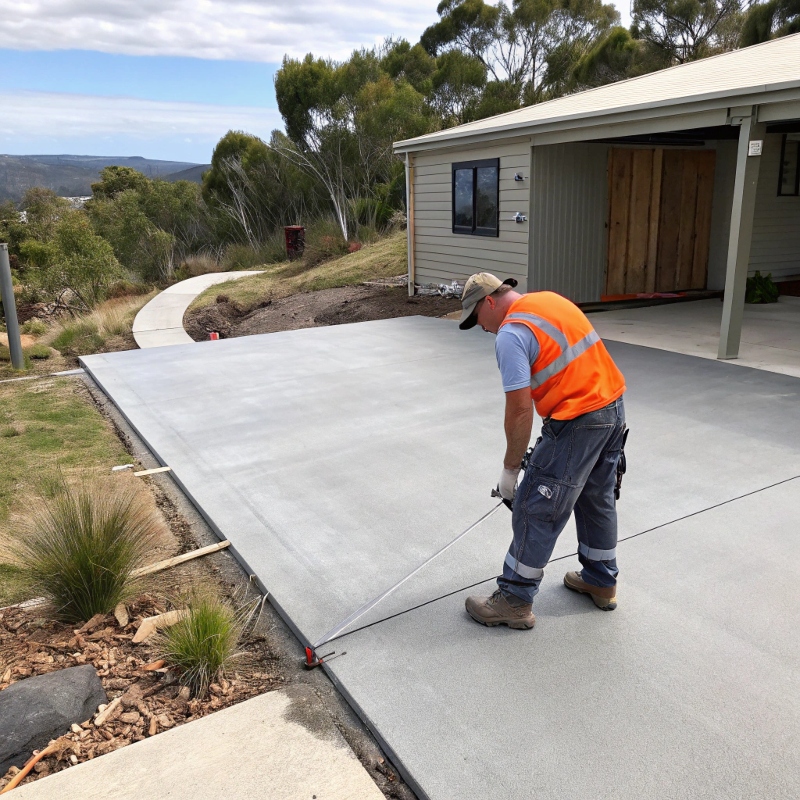
Residential slabs in Hobart are typically 100 mm thick with thickened edges of 300–450 mm, while thicker slabs are specified for two-storey homes or poor soil conditions. Commercial slabs range from about 125–200 mm depending on use, with heavier reinforcement for warehouses and industrial sites.
Concrete strength grades are matched to the job—N20 or N25 for residential work and higher grades like N32 for commercial applications—sourced from tested local suppliers. Reinforcement usually involves SL72 mesh for homes, with heavier mesh or steel bar used where loads are higher.
Curing methods are adjusted for Hobart’s weather to ensure proper strength development, and control joints are cut at planned intervals to manage cracking and improve long-term slab performance.
How We Pour Your Slab
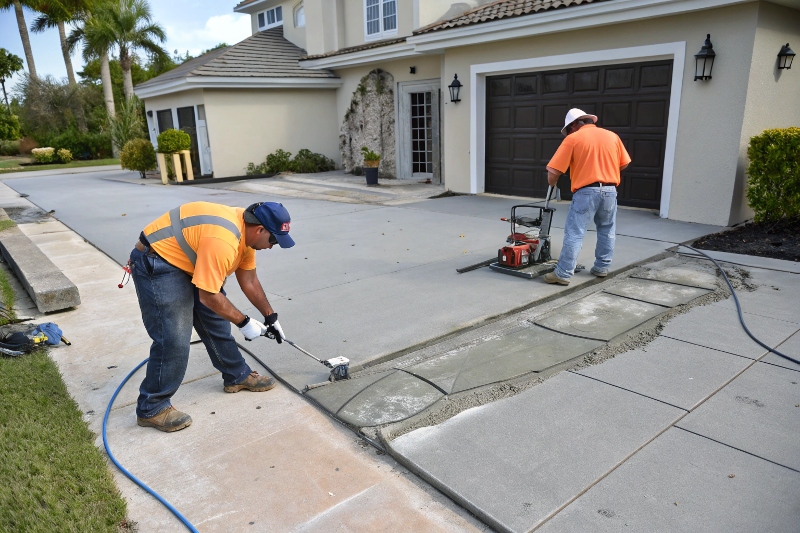
The slab process starts with a site survey to assess access, slope, services, and review plans and soil reports. Excavation follows, creating the correct depth and level base, including space for thickened edges.
The base is then compacted and stabilised with crushed rock or roadbase as needed. Formwork is installed and carefully levelled, followed by placement of reinforcement mesh or steel bars at the correct height within the slab.
Plumbing and electrical conduits are positioned before pouring. On pour day, concrete is placed, levelled, and finished to the required surface. Afterward, the slab is protected and cured according to weather conditions to achieve full strength.
What You Get with a Quality Slab
A quality concrete slab provides a level, stable platform that makes construction easier and ensures the building lines up correctly. Proper moisture barriers and drainage protect the home from rising damp and long-term moisture issues.
Concrete slabs also offer thermal mass benefits, helping regulate indoor temperatures and reduce heating needs in Hobart’s climate. When correctly designed and built, slabs are highly durable, handling Tasmania’s weather with minimal movement or settlement. The result is a long-lasting structural foundation that can perform for 50–100 years, supporting the entire building and protecting your property’s value over the long term.
Where We're Pouring Slabs
Contact Us for Expert Concrete Slab Solutions
Whether you’re building a new home, renovating an existing property, or managing a commercial development, Concrete Power Hobart delivers concrete slab solutions engineered specifically for our unique Tasmanian conditions.
Contact our team today to discuss your project needs, from standard residential slabs to building slabs for sale to contractors. We provide free consultations and transparent pricing that help you make informed decisions about this crucial aspect of your property.
FAQs About Concrete Breaking in Hobart
When's the best time of year to pour a concrete slab in Hobart?
Spring and summer are ideal because we get longer days, warmer temperatures, and more predictable weather in Hobart. That said, we pour slabs year-round and just adjust our methods for winter conditions – we can use hot water in the mix, cover the slab with insulated blankets, and avoid pouring when frost or heavy rain’s forecast. Most builders want to get slabs down before winter hits, so we’re often busiest from September through to April.
How long after you pour the slab can my builder start framing?
Your builder can usually start framing about 5-7 days after we pour, as long as the concrete’s had proper curing time and Hobart’s weather’s been cooperative. We need to saw-cut the control joints first, which happens around day two or three. The slab reaches full strength at 28 days, but it’s hard enough for light construction traffic within a week – your builder just can’t be driving heavy machinery or stacking pallets of bricks on it yet.
What happens if it rains right after you pour my slab in Hobart?
Light rain after the concrete’s finished isn’t a drama – we just cover the slab with plastic sheeting to protect the surface. Heavy rain during the actual pour is a different story, and we’ll usually postpone if there’s serious weather coming because it can weaken the concrete and ruin the finish. Once the concrete’s been down for 4-6 hours and had its initial set, rain won’t hurt it at all – actually helps with curing in Hobart’s drier months.
Do I need to do anything to maintain my concrete slab over the years?
Not really – slabs are pretty low maintenance once they’re in. Just keep your stormwater drains clear so water doesn’t pool around the edges, and fix any plumbing leaks quick because constant water can cause problems over time. If you’re in a coastal area around Hobart, hosing salt spray off exposed edges occasionally doesn’t hurt, but that’s about it – your slab should just sit there doing its job for decades without you thinking about it.
How much does a typical house slab cost in Hobart?
For a standard single-storey home around 200 square meters, you’re looking at roughly $15,000-$25,000 depending on your site conditions and what the engineer specifies. Waffle pod slabs cost more, sloping sites in places like Mount Nelson add excavation costs, and poor access pushes the price up too. Get your soil test done first because that tells us exactly what you need – we can give you a firm quote once we’ve seen your plans, soil report, and actual site.
How do I know if my existing slab has problems that need fixing?
Look for cracks wider than 3mm, doors that suddenly won’t close properly, or floors that feel uneven when you walk across them – these are signs your slab might’ve moved or settled. Water pooling inside your house or damp patches on the floor are red flags too, especially common in older Hobart homes that didn’t have proper moisture barriers installed. If you’re seeing any of this, get a building inspector or engineer to check it out before the problem gets worse – catching foundation issues early saves you serious money down the track.
