
Why Hobart Sites Need Proper Preparation
Here’s what makes site preparation in Hobart different from a lot of other places. And if your contractor doesn’t understand these challenges, you’re gonna end up with issues.
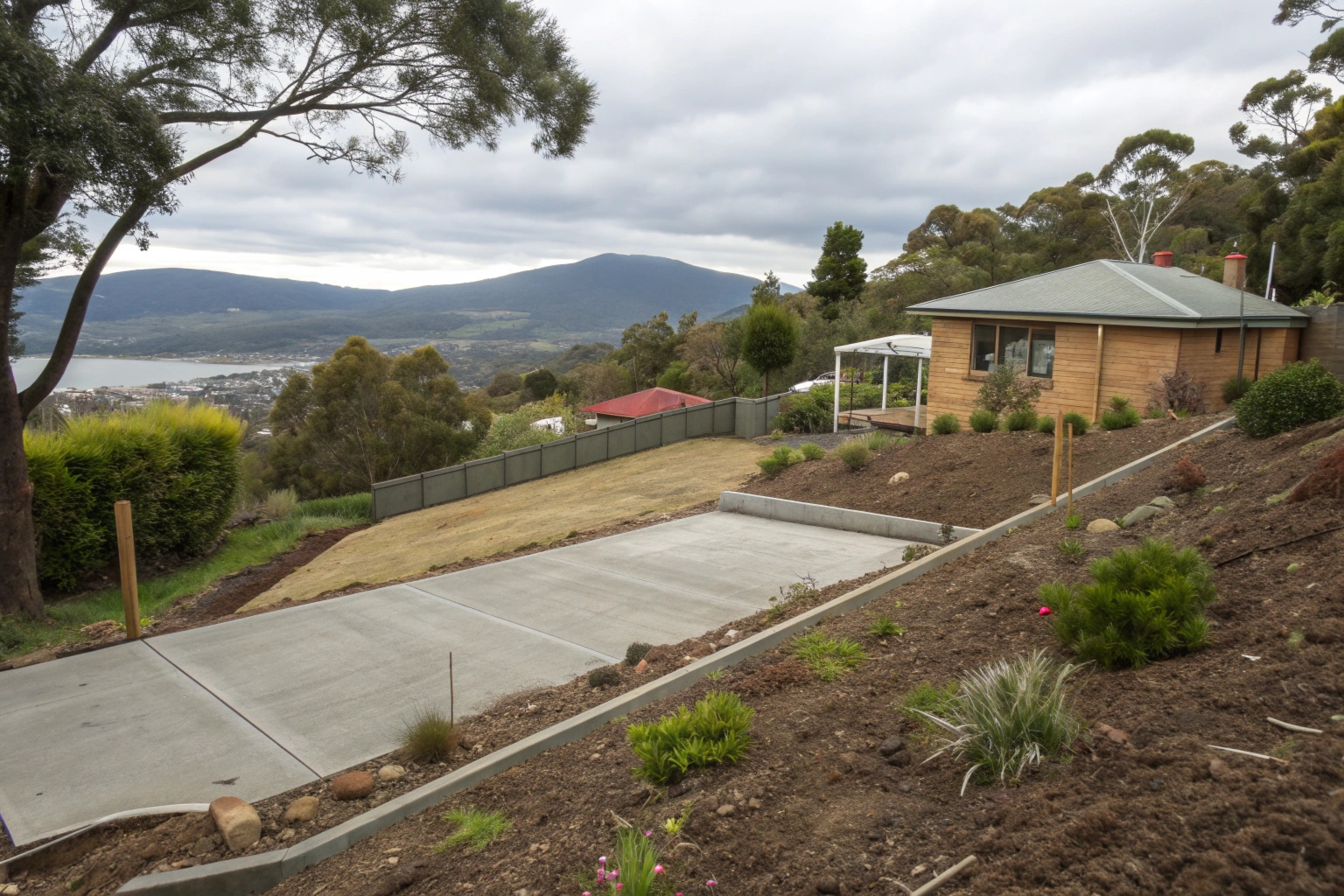
First up – sloping terrain. Especially in suburbs like Mount Nelson, West Hobart, Sandy Bay. Half the properties around here are on hillsides. That means more excavation work, more careful levelling, and way more attention to drainage. You can’t just wing it on sloped blocks.
Then we’ve got our clay and reactive soils. Tasmania’s got some tricky soil conditions. Clay soils move, they expand when wet, they shrink when dry. Your base preparation needs to account for that or your concrete’s gonna crack.
High rainfall is the big one though. We’re talking 600mm+ every year. That’s a lot of water trying to get under your concrete. Which is why drainage isn’t optional here – it’s absolutely essential. You need proper systems to move water away from your slab.
Rock presence is common in certain areas too. Sometimes you hit rock when you’re excavating. That means extra time, extra equipment, sometimes extra cost. But it’s gotta be dealt with properly.
Limited access on established properties is something we deal with all the time. Narrow driveways, existing landscaping that needs protecting, fences in the way. You need the right equipment and the experience to work around it.
And let’s be honest – weather-dependent scheduling is just part of life here. Wet weather delays happen. But proper planning minimises that.

How We Assess Your Site Before We Start
Before we bring any equipment onto your property, we need to understand what we’re dealing with. And that starts with a proper site assessment.
We’ll come out and do an initial site inspection. Walking the area, looking at the terrain, figuring out what needs to happen. It’s not a five-minute job – we’re taking our time to get it right.
Soil type identification is part of that. We need to know if we’re dealing with clay, if there’s rock, what the soil conditions are like. Because that affects how we prepare the base.
Underground service location is critical. We use Dial Before You Dig to mark out where your existing pipes, cables, and services are. Last thing anyone needs is a damaged service line because someone didn’t check first.
We’re looking at drainage patterns too. Where does water go on your property? Where does it pool? How’s it gonna affect your new concrete?
Level and slope measurements give us the exact details we need. How much excavation? How much fill? What’s the fall gonna be?
Access evaluation tells us what equipment we can get in there. Can we bring in an excavator? Or are we working with tighter access?
We calculate material quantities based on what we find. How much crushed rock you’ll need, how much soil needs removing.
And if your project needs it, we’ll determine engineering requirements – whether you need an engineer’s report, soil testing, that kind of thing.
Then we give you a proper quote based on the actual conditions. No surprises.
The Step-by-Step Ground Preparation Process
Alright, so here’s how the actual preparation work happens once we’re on site. And yeah, there’s an order to all this – you can’t just skip steps.
Vegetation and topsoil removal comes first. Any grass, plants, topsoil – that all needs to come off. Topsoil’s great for gardens, terrible for concrete bases.
Then we’re into excavation to the required depth. Usually 100mm to 200mm depending on your project. Could be more if you’ve got poor soil conditions or if engineering says so.
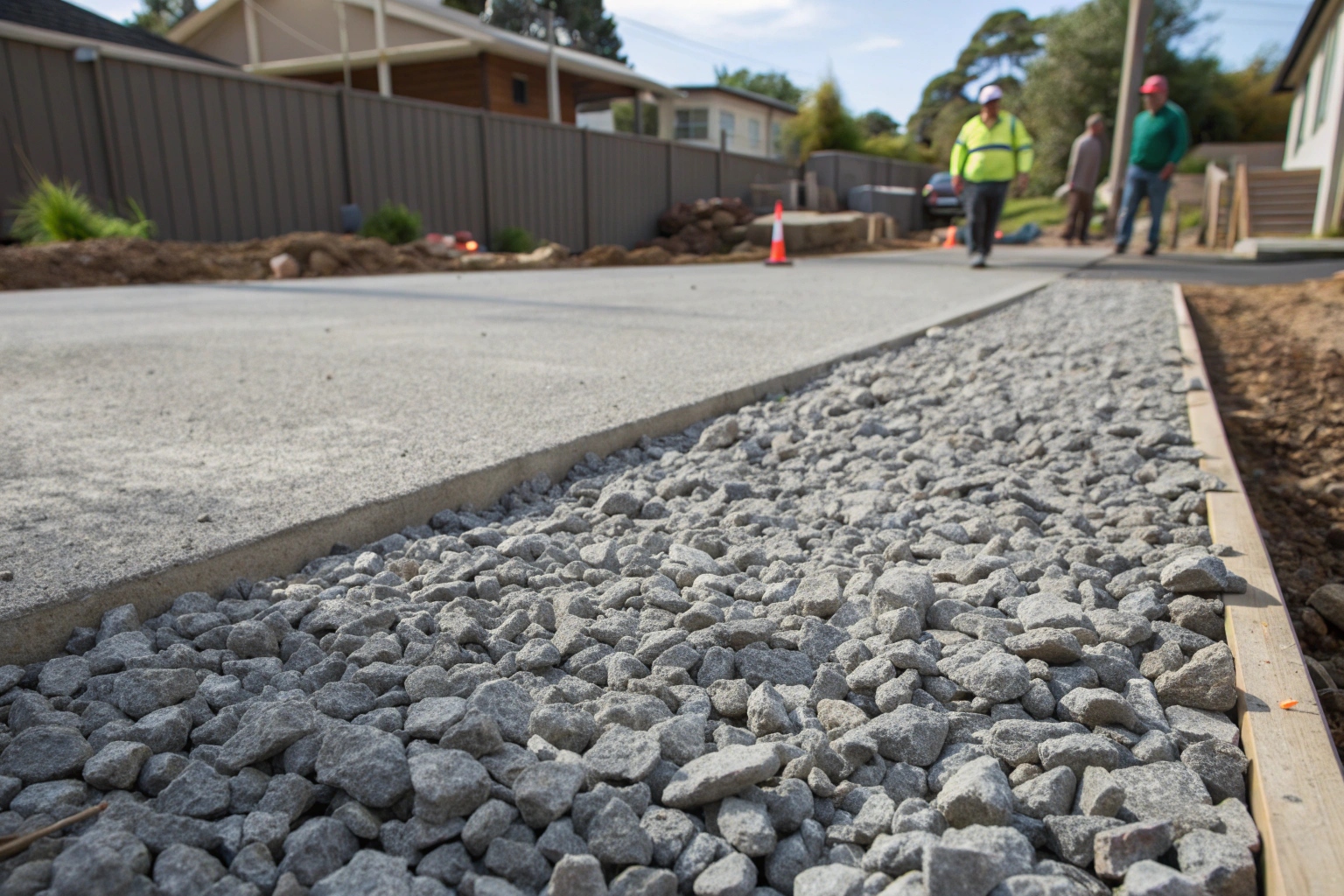
Base layer installation is where we bring in the crushed rock or road base. That’s typically 20mm or 40mm aggregate for crushed rock, or stabilised road base material.
We’re spreading and levelling that base material carefully. Getting it even across the whole area, bringing it to the right levels.
Moisture conditioning happens if the base material needs it. Sometimes you need to add a bit of water to get proper compaction.
Then comes compaction. This is huge. We’re using plate compactors for smaller areas, rollers for bigger jobs. We need to hit 95%+ standard compaction – that’s not negotiable.
Final level and grade verification happens before we’re done. We check everything’s at the right height, the falls are correct, it’s all ready.
And then your site’s ready for concrete placement. Base is compacted, levels are right, drainage is in. Job done properly.
Base Material, Compaction & Drainage - The Technical Stuff That Matters
Here’s where a lot of concrete contractors lose people. They start talking about compaction percentages and aggregate sizes and everyone’s eyes glaze over. But this stuff actually matters for how your concrete performs.
Base material is what sits under your concrete. We typically use crushed rock – either 20mm or 40mm aggregate – or road base, which is stabilised crushed material. The thickness? Usually 75mm to 100mm minimum. That gives you proper support.
Compaction is where the magic happens though. You can have the best base material in the world, but if it’s not compacted properly? You’re gonna get settling, cracking, all sorts of problems. We’re aiming for 95%+ standard compaction. We achieve that using plate compactors for smaller areas, rollers for bigger jobs. And we verify it – not just guess.
Why does this matter? Because proper base prevents slab cracking. That’s the whole point. It’s critical for long-term concrete performance.
Now, drainage integration – this is massive in Hobart. We’re installing agricultural pipe around the perimeter of your concrete. Planning how surface water’s gonna move. Making sure you’ve got the right fall away from structures – usually 1:100 is what you’re after.
We’re connecting everything to stormwater systems where needed. And with our 600mm+ annual rainfall, this isn’t optional. Preventing water accumulation under concrete is what keeps your slab from developing moisture problems, from getting that hollow sound when you walk on it.
Proper drainage? That’s long-term foundation protection. It extends your concrete’s life by decades.

Services, Formwork & Equipment - Getting Everything Ready
Before concrete gets poured, there’s other stuff that needs to happen. And it all needs to be coordinated properly.
Service installation is a big part of site prep. Your plumbing pipes and trenches need to go in. Electrical conduits for any floor outlets you’re planning. Gas lines if you’ve got gas heating or cooking. NBN and communication cables too.
Here’s the thing – you want all this done before concrete goes down. Because cutting into concrete later to add services? That’s expensive, it weakens the slab, and it’s just not ideal. We coordinate with your plumber, sparky, whoever needs access. Get it all positioned and documented properly.
Formwork and boxing comes next. That’s installing the edge forms, setting them to the right heights, making sure they’re straight and secure. We’re also positioning any reinforcement – mesh or steel bars depending on your engineer’s specs. Planning expansion joints. Getting everything inspected before concrete arrives.
Professional formwork gives you quality edges. Makes the whole job look better.
Equipment-wise, we’ve got what’s needed. Excavators for ground excavation – usually 3 to 8 tonne depending on the job. Bobcats for spreading and leveling material. Tip trucks bringing material in and taking soil away. Plate compactors and rollers for compaction work. Laser levels for precision control.
Right equipment means efficient preparation. And efficient preparation means we’re not on your property longer than necessary.
FAQs About Site Preparation in Hobart
Ideally, not long at all. Once we’ve got your site prepared – base compacted, formwork in, services done – you want to pour concrete pretty quickly. Weather permitting, same day or next day is best. The longer you wait, the more chance rain or weather affects your prepared base. We coordinate timing with the concrete contractor to minimise that gap.
Depends on how much rain we’re talking about. Light rain? Usually not a problem. Heavy rain that saturates the base? That can delay compaction work because we can’t achieve proper compaction in waterlogged material. Sometimes we need to let things dry out a bit, or add fresh material on top. It’s part of working in Tasmania – we plan for it.
Sometimes yeah, sometimes no. Depends on your project and your soil conditions. New house slabs? Usually yes. Simple shed base? Probably not. If you’ve got reactive soils, poor ground conditions, or if council requires it, then you’ll need engineering input. We can advise on that after we assess your site.
We do our best. If there’s established trees or garden areas you want to protect, we’ll work around them where possible. Sometimes we need to excavate close to tree roots though, and that can be tricky. We’ll talk through options with you – where we can protect things, where compromises might be needed.
Rock happens in certain parts of Hobart. If we hit it, we’ve got rock breaker attachments for our excavators. Does it add time? Yeah, usually. Does it add cost? Can do, depending on how much rock there is. Sometimes if there’s extensive rock, we look at alternative solutions. But generally we can work through it.
In Hobart? Pretty much yeah. With our rainfall, you’re asking for trouble if you don’t have proper drainage around concrete. Even on flat sites you need water to move away from the slab. On sloped sites it’s even more critical. Agricultural pipe around the perimeter as a minimum – that’s just standard practice here.
Ready to Get Your Site Prepared Properly?
Here’s the reality – you can’t build quality concrete on poor preparation. Doesn’t matter how good your concrete contractor is, if the groundwork’s not done right, you’re gonna have problems down the track.
We’ve been doing site preparation throughout Hobart and across Tasmania for years. We understand the local challenges – the clay soils, the slopes, the rainfall, the access issues. We know what proper base preparation looks like. And we know what drainage systems actually work in Hobart conditions.
Whether you’re planning a new house slab, driveway, shed base, patio, or any other concrete project – it starts with getting the site ready. Properly excavated, properly compacted, properly drained. Ready for concrete that’s gonna last.
We’ll come out and assess your site. No obligation. We’ll tell you exactly what needs to happen, what it’ll cost, how long it’ll take. Then if you want to go ahead, we’ll get it done right.
Because the foundation of any good concrete job? That’s the groundwork that happens before the concrete arrives.
Get in touch today for a free site assessment and quote.
